
Inside server.js, we already have a root for /about, which means we can render our hbs template instead of sending back this about page string. We will remove our call to res.send and we'll replace it with res.render:
app.get('/about', (req, res) => {
  res.render
});
Render will let us render any of the templates we have set up with our current view engine about.hbs file. We do indeed have the about template and we can pass that name, about.hbs, in as the first and only argument. We'll render about.hbs:
app.get('/about', (req, res) => {
  res.render('about.hbs');
});
This will be enough to get that static page rendering. We'll save server.js and in the Terminal, we'll clear the output and we'll run our server using nodemon server.js:
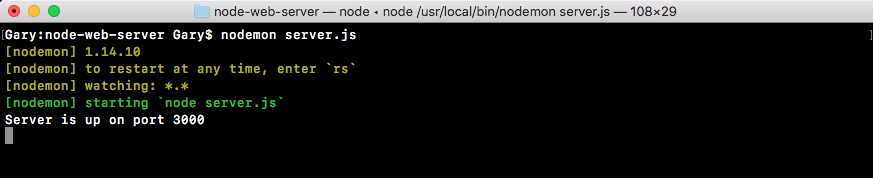
Once the server is up and running, it is showing on port 3000. We can open up this /about URL and see what we get. We'll head into Chrome and open up localhost:3000 /about, and when we do that, we get the following:
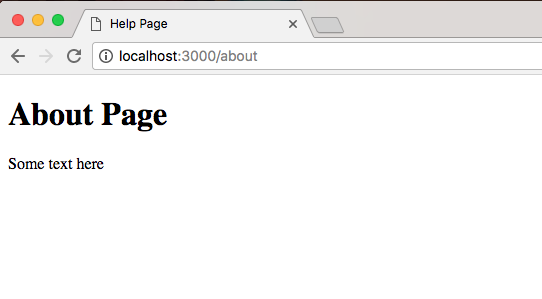
We get my about page rendered just like we'd expect it. We've got an h1 tag, which shows up nice and big, and we have our paragraph tag, which shows up the following. So far we have used hbs but we haven't actually used any of its features. Right now, we're rendering a dynamic page, so we might as well have not even included it. What I want to do is talk about how we can inject data inside of our templates.