Now before we get into the options object, let's add one more call right after command. We're going to call .help, which is a method, so we're going to call it as a function, and we don't need to pass in any arguments:
const argv = yargs
  .command('add', 'Add a new note', {

  })
  .help()
  .argv;
When we add on this help call, it sets up yargs to return some really useful information when someone runs the program. For example, I can run the node app.js command with the help flag. The help flag is added because we called that help method, and when I run the program, you can see all of the options we have available:
node app.js --help
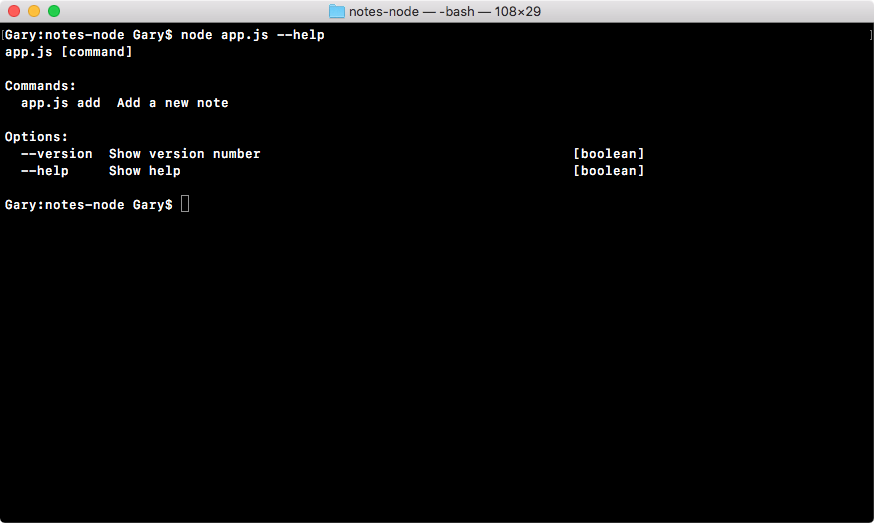
As shown in the preceding output, we have one command, add Add a new note, and a help option for the current command, help. And the same thing holds true if we run the node app.js add command with help as shown here:
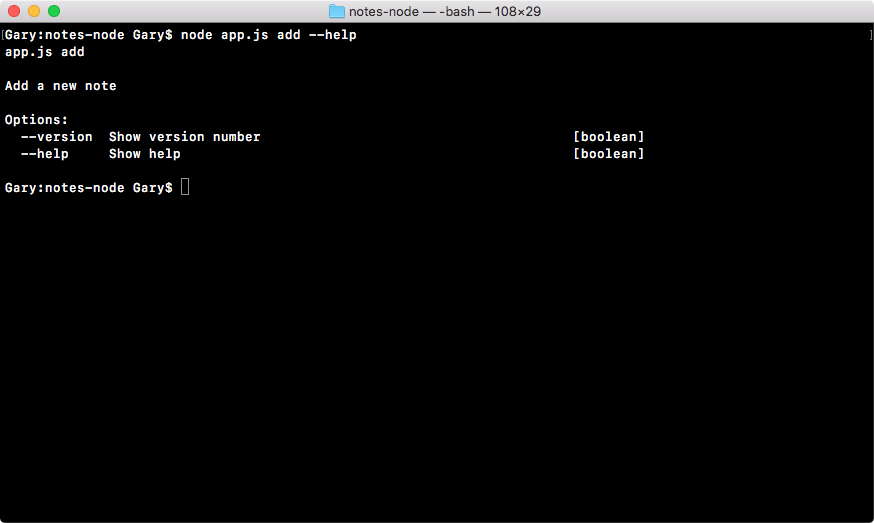
node app.js add --help
In this output, we can view all of the options and arguments for add command, which in this case happens to be none because we haven't set those up: