
Now one more thing we'd discuss is the call to app.listen(3000). The app.listen does take a second argument. It's optional. It's a function. This will let us do something once the server is up because it can take a little bit of time to get started. In our case we'll assign console.log a message: Server is up on port 3000:
app.listen(3000, () => {
  console.log('Server is up on port 3000');
});
Now it's really clear to the person who started the app that the server is actually ready to go because the message will print to the screen. If we save server.js, and go back into the Terminal we can see Server is up on port 3000 prints:

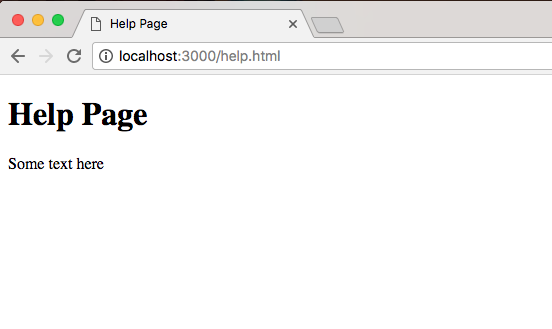
Back inside the browser we can refresh and we get the exact same results:
That's it for this section. We now have a static directory where we can include JavaScript, CSS, images, or any other file types we like.