Now we can start making some assertions about that sum variable using the expect object. We can pass it into expect to make our assertions, and these assertions aren't going to be new. It's stuff we've already done. We'll expect that the sum variable equals, using toBe, the number 7. Then we'll check that it's a number, using toBeA, inside quotes, number:
it('should async add two numbers', () => {
  utils.asyncAdd(4, 3, (sum) => {
    expect(sum).toBe(7).toBeA('number');
  });
});
Now obviously if it is equal to 7 that means it is a number, but we're using both just to simulate exactly how chaining will work inside of our expect calls.
Now that we have our assertions in place, let's save the file and run our test and see what happens. We'll run it from Terminal, npm run test-watch to start up our nodemon watching script:
npm run test-watch
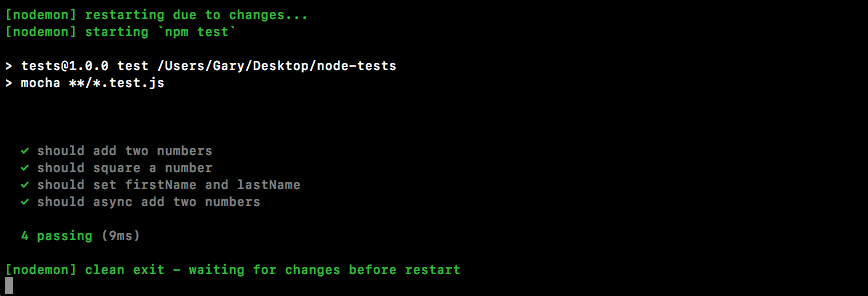
Now our tests will run and the test does indeed pass:
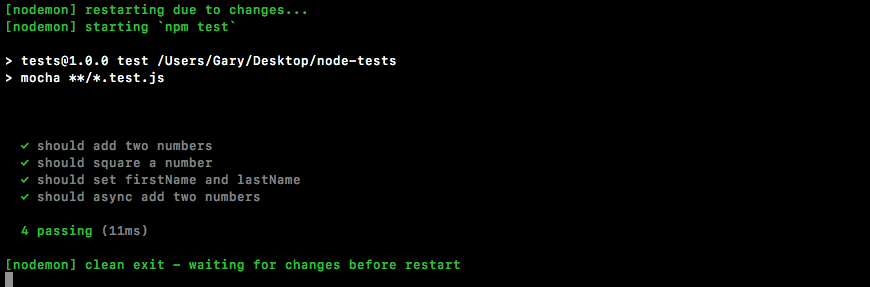
The only problem is that it's passing for the wrong reasons. If we change 7 to 10 and save the file:
it('should async add two numbers', () => {
  utils.asyncAdd(4, 3, (sum) => {
    expect(sum).toBe(10).toBeA('number');
  });
});
In this case, the test is still going to pass. Right here, you see we have four tests passing: