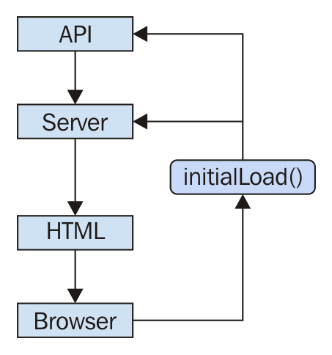
The main motivation behind server-side rendering, for me personally, is improved performance. In particular, the initial rendering just feels faster for the user and this translates to an overall better user experience. It doesn't matter how fast your application is once it's loaded and ready to go; it's the initial load time that leaves a lasting impression on your users.
There are three reasons that this approach means better performance for the initial load:
- The rendering that takes place on the server is generating a string; there's no need to compute a difference or to interact with the DOM in any way. Producing a string of rendered markup is inherently faster than rendering components in the browser.
- The rendered HTML is displayed as soon as it arrives. Any JavaScript code that needs to run on the initial load is run after the user is already looking at the content.
- There are fewer network requests to fetch data from the API, because these have already happened on the server and the server typically has vastly more resources than a single client.
The following diagram illustrates these performance ideas: