
The JSX of any monolithic component is the best starting point for figuring out how to refactor it into smaller components. Let's visualize the structure of the component that we're currently refactoring:
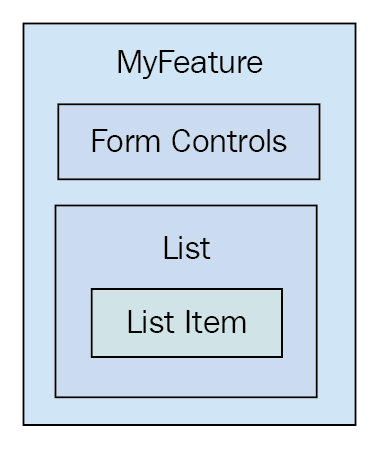
The top part of the JSX is form controls, so this could easily become its own component:
<header>
  <h1>Articles</h1>
  <input
    placeholder="Title"
    value={title}
    onChange={this.onChangeTitle}
  />
  <input
    placeholder="Summary"
    value={summary}
    onChange={this.onChangeSummary}
  />
  <button onClick={this.onClickAdd}>Add</button>
</header>
Next, you have the list of articles:
<ul>
{articles.map(i => (
<li key={i.id}>
<a
href="#"
onClick={
this.onClickToggle.bind(null, i.id)
}
>
{i.title}
</a>
<a
href="#"
onClick={this.onClickRemove.bind(null, i.id)}
>
✗
</a>
<p style={{ display: i.display }}>
{i.summary}
</p>
</li>
))}
</ul>
Within this list, there's potential for an article item, which would be everything in the <li> tag.
The JSX alone paints a picture of how the UI structure can be decomposed into smaller React components. This refactoring exercise would be difficult without declarative JSX markup.