Now we have automated tests for the model and a user-defined module which makes use of them. This ensures the stability of the module and makes it ready for wider adoption.
It is time to build a new Express-based application and add a route, exposing the new module to it:
const express = require('express');
const router = express.Router();

const catalog = require('../modules/catalog');
const model = require('../model/item.js');

router.get('/', function(request, response, next) {
  catalog.findAllItems(response);
});

router.get('/item/:itemId', function(request, response, next) {
  console.log(request.url + ' : querying for ' + request.params.itemId);
  catalog.findItemById(request.params.itemId, response);
});
router.get('/:categoryId', function(request, response, next) {
  console.log(request.url + ' : querying for ' + request.params.categoryId);
  catalog.findItemsByCategory(request.params.categoryId, response);
});

router.post('/', function(request, response, next) {
  console.log('Saving item using POST method);
  catalog.saveItem(request, response);
});

router.put('/', function(request, response, next) {
  console.log('Saving item using PUT method');
  catalog.saveItem(request, response);
});

router.delete('/item/:itemId', function(request, response, next) {
  console.log('Deleting item with id: request.params.itemId);
  catalog.remove(request, response);
});

module.exports = router;
To sum up, we routed each function of the catalog data service module to an operation of a RESTful service:
- GET /catalog/item/:itemId: This calls catalog.findItemById()
- POST /catalog: This calls catalog.saveItem()
- PUT /catalog: This calls catalog.saveItem()
- DELETE / catalog/item/:id: This calls catalog.remove()
- GET /catalog/:category: This calls catalog.findItemsByCategory()
- GET /catalog/: This calls catalog.findAllItems()
As we have our operations exposed, we are ready to perform some more serious REST testing. Let's start Postman and test the newly exposed endpoints:
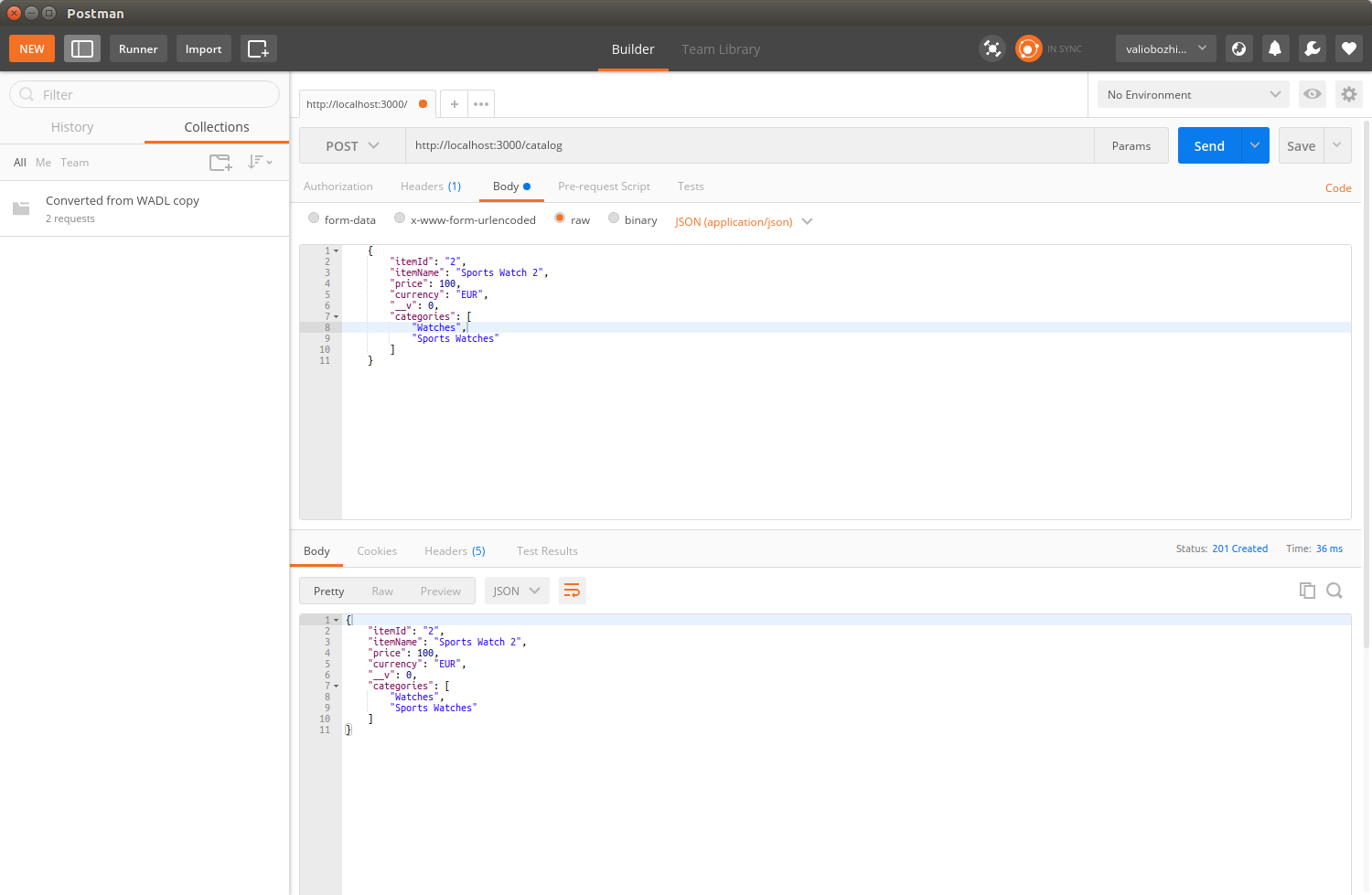
Spend some time testing each operation thoroughly. This will help you gain confidence that the catalog data service module really works, and also will make you more comfortable with how HTTP responses are served and read. As a RESTful API developer, you should be able to read HTTP dumps, which show different request payloads and status codes, fluently.