Table of Contents for
Your Code as a Crime Scene
 Your Code as a Crime Scene
Published by
Pragmatic Bookshelf, 2015
Your Code as a Crime Scene
Published by
Pragmatic Bookshelf, 2015
- Title Page
- Your Code as a Crime Scene
- Your Code as a Crime Scene
- For the Best Reading Experience...
- Table of Contents
- Early praise for Your Code as a Crime Scene
- Foreword by Michael Feathers
- Acknowledgments
- Chapter 1: Welcome!
- About This Book
- Optimize for Understanding
- How to Read This Book
- Toward a New Approach
- Get Your Investigative Tools
- Part 1: Evolving Software
- Chapter 2: Code as a Crime Scene
- Meet the Problems of Scale
- Get a Crash Course in Offender Profiling
- Profiling the Ripper
- Apply Geographical Offender Profiling to Code
- Learn from the Spatial Movement of Programmers
- Find Your Own Hotspots
- Chapter 3: Creating an Offender Profile
- Mining Evolutionary Data
- Automated Mining with Code Maat
- Add the Complexity Dimension
- Merge Complexity and Effort
- Limitations of the Hotspot Criteria
- Use Hotspots as a Guide
- Dig Deeper
- Chapter 4: Analyze Hotspots in Large-Scale Systems
- Analyze a Large Codebase
- Visualize Hotspots
- Explore the Visualization
- Study the Distribution of Hotspots
- Differentiate Between True Problems and False Positives
- Chapter 5: Judge Hotspots with the Power of Names
- Know the Cognitive Advantages of Good Names
- Investigate a Hotspot by Its Name
- Understand the Limitations of Heuristics
- Chapter 6: Calculate Complexity Trends from Your Code’s Shape
- Complexity by the Visual Shape of Programs
- Learn About the Negative Space in Code
- Analyze Complexity Trends in Hotspots
- Evaluate the Growth Patterns
- From Individual Hotspots to Architectures
- Part 2: Dissect Your Architecture
- Chapter 7: Treat Your Code As a Cooperative Witness
- Know How Your Brain Deceives You
- Learn the Modus Operandi of a Code Change
- Use Temporal Coupling to Reduce Bias
- Prepare to Analyze Temporal Coupling
- Chapter 8: Detect Architectural Decay
- Support Your Redesigns with Data
- Analyze Temporal Coupling
- Catch Architectural Decay
- React to Structural Trends
- Scale to System Architectures
- Chapter 9: Build a Safety Net for Your Architecture
- Know What’s in an Architecture
- Analyze the Evolution on a System Level
- Differentiate Between the Level of Tests
- Create a Safety Net for Your Automated Tests
- Know the Costs of Automation Gone Wrong
- Chapter 10: Use Beauty as a Guiding Principle
- Learn Why Attractiveness Matters
- Write Beautiful Code
- Avoid Surprises in Your Architecture
- Analyze Layered Architectures
- Find Surprising Change Patterns
- Expand Your Analyses
- Part 3: Master the Social Aspects of Code
- Chapter 11: Norms, Groups, and False Serial Killers
- Learn Why the Right People Don’t Speak Up
- Understand Pluralistic Ignorance
- Witness Groupthink in Action
- Discover Your Team’s Modus Operandi
- Mine Organizational Metrics from Code
- Chapter 12: Discover Organizational Metrics in Your Codebase
- Let’s Work in the Communication Business
- Find the Social Problems of Scale
- Measure Temporal Coupling over Organizational Boundaries
- Evaluate Communication Costs
- Take It Step by Step
- Chapter 13: Build a Knowledge Map of Your System
- Know Your Knowledge Distribution
- Grow Your Mental Maps
- Investigate Knowledge in the Scala Repository
- Visualize Knowledge Loss
- Get More Details with Code Churn
- Chapter 14: Dive Deeper with Code Churn
- Cure the Disease, Not the Symptoms
- Discover Your Process Loss from Code
- Investigate the Disposal Sites of Killers and Code
- Predict Defects
- Time to Move On
- Chapter 15: Toward the Future
- Let Your Questions Guide Your Analysis
- Take Other Approaches
- Let’s Look into the Future
- Write to Evolve
- Appendix 1: Refactoring Hotspots
- Refactor Guided by Names
- Bibliography
- You May Be Interested In…
Understand Pluralistic Ignorance
What just happened in our fictional example is that you fell prey to pluralistic ignorance. Pluralistic ignorance happens in situations where everyone privately rejects a norm but thinks that everyone else in the group supports it. Over time, pluralistic ignorance can lead to situations where a group follows rules that all of its members reject in private.
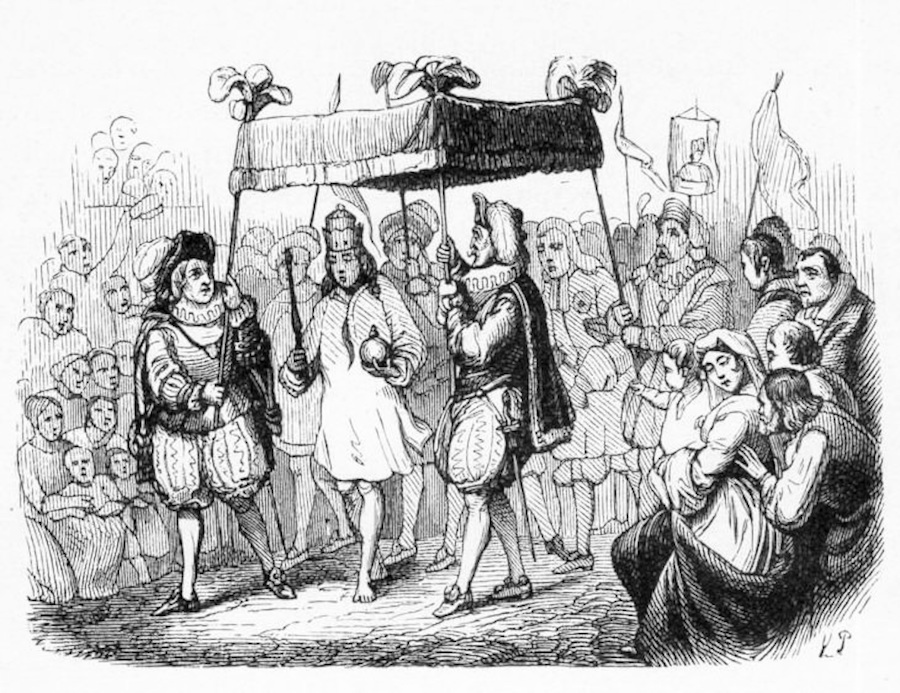
We fall in this social trap when we conclude that the behavior of our peers depends on beliefs that are different from our own, even if we behave in an identical way ourselves. That’s what happened around Andersen’s naked emperor. Because everyone praised the emperor’s new clothes, each individual thought they missed something obvious. That’s why they chose to conform to the group behavior and play along with the praise of the wonderful clothes they couldn’t see.
Another common social bias is to mistake a familiar opinion for a widespread one. If we hear the same option repeatedly, we come to think of that opinion as more prevalent than it really is. As if that wasn’t bad enough, we fall for the bias even if it’s the same person who keeps expressing that opinion (source: Inferring the popularity of an opinion from its familiarity: A repetitive voice can sound like a chorus [WMGS07]).
This means it’s enough with one individual, constantly expressing a strong opinion, to bias your whole software development project. It may be about technology choices, methodologies, or programming languages. Let’s see what you can do about it.
Challenge with Questions and Data
Most people don’t like to express deviating opinions, but there are exceptions. One case is when our minority opinion is aligned with the group ideal. That is, we have a minority opinion, but it deviates from the group norm in a positive way; the group has some quality it values, and we take a more extreme position and value it even more. In that setting, we’re more inclined to speak up, and we’ll feel good about it when we do.
Within our world of programming, such “good” minority opinions may include desired attributes such as automatic tests and code quality. For example, if tests are good, then testing everything must be even better (even if it forces us to slice our designs in unfathomable pieces). And since code quality matters, we must write code of the highest possible quality all the time (even when prototyping throwaway code).
Given what we know about pluralistic ignorance and our tendency to mistake familiar opinions for common ones, it’s easy to see how these strong, deviating opinions may move a team in a more extreme direction.
Social biases are hard to avoid. When you suspect them in your team, try one of the following approaches:
-
Ask questions: By asking a question, you make others aware that the proposed views aren’t shared by everyone.
-
Talk to people: Decision biases like pluralistic ignorance often grow from our fears of rejection and criticism. So if you think a decision is wrong but everyone else seems fine with it, talk to your peers. Ask them what they like about the decision.
-
Support decisions with data: We cannot avoid social and cognitive biases. What we can do is to check our assumptions with data that either supports or challenges the decision. The rest of this book will arm you with several analyses for this purpose.
If you’re in a leadership position, you have additional possibilities to guide your group toward good decisions:
-
Use outside experts to review your decisions.
-
Let subgroups work independently on the same problem.
-
Avoid advocating a specific solution early in the discussions.
-
Discuss worst-case scenarios to make the group risk-aware.
-
Plan a second meeting upfront to reconsider the decisions of the first one.
These strategies are useful to avoid groupthink (source: Group Process, Group Decision, Group Action [BK03]). Groupthink is a disastrous consequence of social biases where the group ends up supressing all forms of internal dissent. The result is group decisions that ignore alternatives and the risk of failure, and that give a false sense of consensus.
As you’ve seen, pluralistic ignorance often leads to groupthink. This seems to be what happened in the Thomas Quick case.