
Namespaces package system resources, such as filesystems, network access, and so on, and present them to a process. From the view of the process, it does not even know that there are resources outside of its allocation.
One of the resources that can be namespaced is process IDs (PIDs). In Linux, PIDs are organized as a tree, with the system’s initiation process (systemd) given the PID 1, and located at the root of the tree.
If we namespace PIDs, we are masking a child process from the rest of the processes, by resetting the root of the child process to have a PID of 1. This means descendant processes will treat the child process as if it is a root, and they will have no knowledge of any other processes past that point:
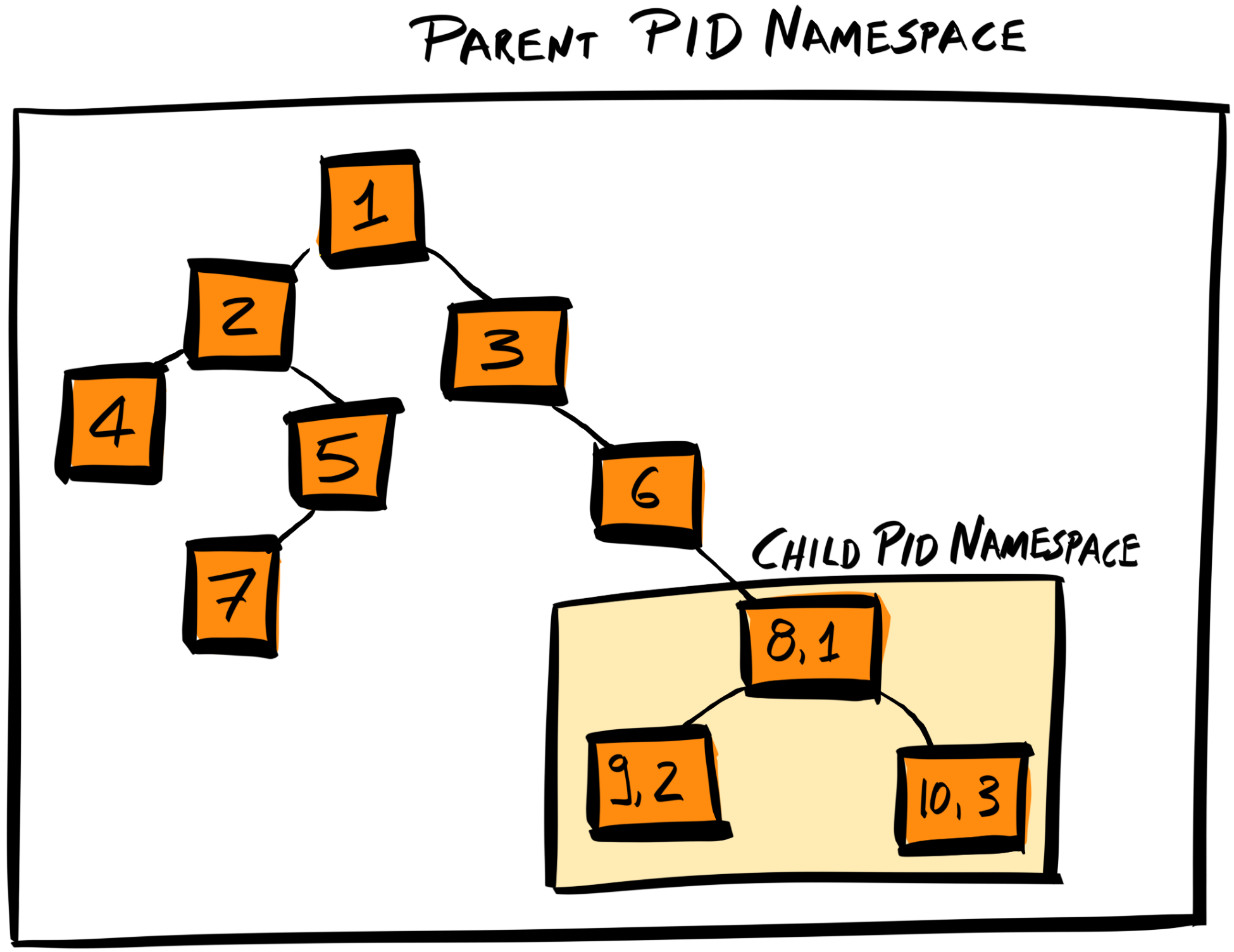
You can view your system's process tree by running pstree in your terminal.
The combination of the two Linux kernel mechanisms described here allows us to have containers that are isolated from each other (using namespaces) and restricted in resources (using control groups). Each container can have its own filesystem, networks, and so on in isolation from other containers on the same host machine.