
Another way to load balance client requests is to use a load balancer. Instead of exposing the backend servers on multiple IP addresses and letting the client pick which server to use, we can instead keep our backend servers hidden behind a private local network. When a client wants to reach our application, it would send the request to the load balancer, which will forward the requests to the backends.
Generally speaking, there are two types of load balancers—Layer 4 (L4), Layer 7 (L7). Their names relate to the corresponding layer inside the Open Systems Interconnection (OSI) reference model—a standard conceptual model that partitions a communication system into abstraction layers:
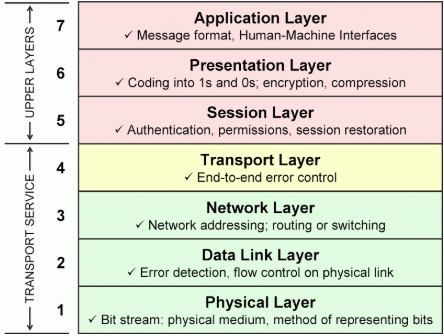
There are numerous standard protocols at each layer that specify how data should be packaged and transported. For example, FTP and MQTT are both application layer protocols. FTP is designed for file transfer, whereas MQTT is designed for publish-subscribe-based messaging.
When a load balancer receives a request, it will make a decision as to which backend server to forward a request to. These decisions are made using information embedded in the request. An L4 load balancer would use information from the transport layer, whereas an L7 load balancer can use information from the application layer, including the request body itself.