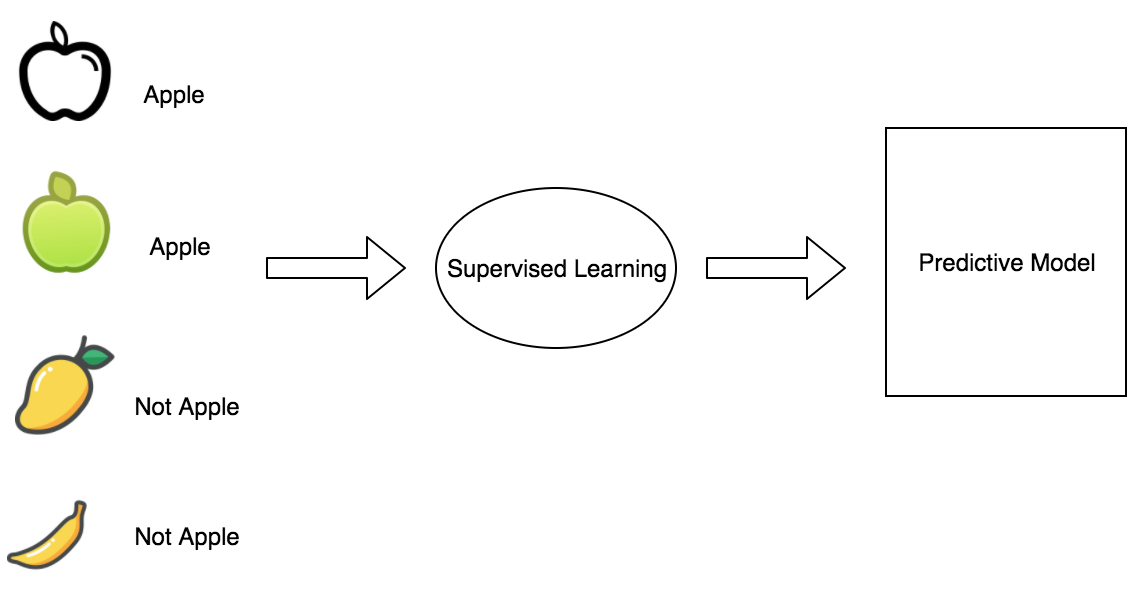
Supervised learning is where a known dataset is used to classify or predict with data in hand. Supervised learning methods learn from labelled data and then use the insight to make decisions on the testing data.
Supervised learning has several subcategories of learning, for example:
- Semi-supervised learning: This is the type of learning where the initial training data is incomplete. In other words, in this type of learning, both labelled and unlabelled are used in the training phase.
- Active learning: In this type of learning algorithm, the machine learning system gets active queries made to the user and learns on-the-go. This is a specialized case of supervised learning.
Some popular examples of supervised learning are:
- Face recognition: Face recognizers use supervised approaches to identify new faces. Face recognizers extract information from a bunch of facial images that are provided to it during the training phase. It uses insights gained after training to detect new faces.
- Spam detect: Supervised learning helps distinguish spam emails in the inbox by separating them from legitimate emails also known as ham emails. During this process, the training data enables learning, which helps such systems to send ham emails to the inbox and spam emails to the Spam folder: