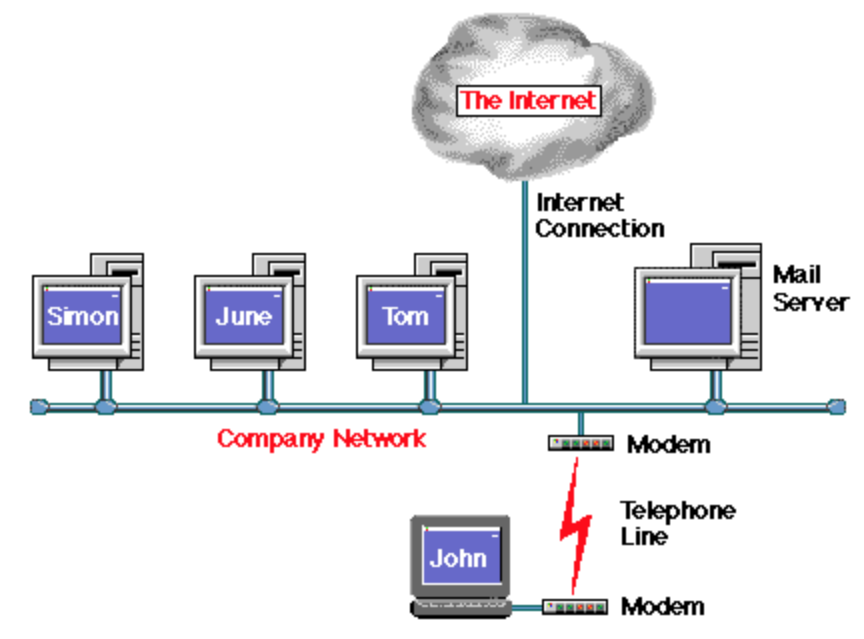
Mail servers are meant to receive email items, and they consist of a return path. The path bounces an email off to the ID mentioned in the return path. Mail servers are equivalent to the neighborhood mailman. All emails pass through a series of servers called mail-servers through series of processes.
The different types of mail servers are as follows:
- POP3 email servers: Post Office Protocol 3 (POP3) is a type of email server used by internet service providers (ISP). These servers store emails in remote servers. When the emails are opened by the users, they are fetched from the remote servers and are stored locally in the user's computer/machine. The external copy of the email is then deleted from the remote server.
- IMAP email servers: Internet Message Access Protocol (IMAP) is a variation of a POP3 type of server. IMAP email servers are mainly used for business purposes, and allow for organizing, previewing, and deleting emails. After the emails are organized, they can be transferred to the user's computer. A copy of the email will still reside in the external server, unless the business user decides to explicitly delete it.
- SMTP email servers: These work hand in hand with the POP3 and IMAP servers. They help with sending emails to and fro, from the server to the user. The following diagram illustrates the SMTP process: