Dealing with strings in Python is very simple: you can search, replace, change character case, and perform other manipulations with ease:
To search for a string, you can use the find method like this:
#!/usr/bin/python3
str = "Welcome to Python scripting world"
print(str.find("scripting"))

The string count in Python starts from zero too, so the position of the word scripting is at 18.
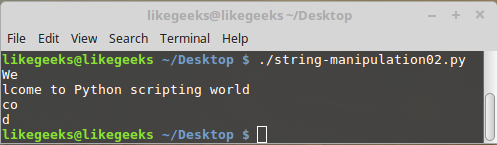
You can get a specific substring using square brackets like this:
#!/usr/bin/python3
str = "Welcome to Python scripting world"
print(str[:2]) # Get the first 2 letters (zero based)
print(str[2:]) # Start from the second letter
print(str[3:5]) # from the third to fifth letter
print(str[-1]) # -1 means the last letter if you don't know the length
To replace a string, you can use the replace method like this:
#!/usr/bin/python3
str = "Welcome to Python scripting world"
str2 = str.replace("Python", "Shell")
print(str2)

To change the character case, you can use upper() and lower() functions:
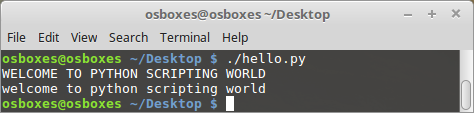
As you can see, working with strings in Python is very simple. Python as an alternative scripting language is an awesome choice.
The power of Python lies in the libraries available out there. Literally, there are thousands of libraries for everything you can imagine.