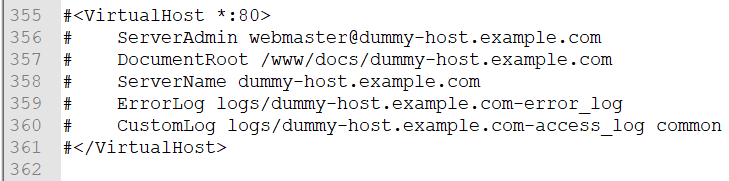
The very first step in creating the template is to isolate the lines that we need. In our case, this will be the lines included in the sample virtual host definition that we saw in the earlier screenshot. This includes the opening and closing tag for the VirtualHost and everything in between. We can use line numbers for this; however, this will probably not be reliable, as we will need to assume that nothing has changed in the file for the line numbers to be consistent. For completeness, we will show this before moving onto a more reliable mechanism.
First, we will remind ourselves of how we can print the whole file with sed. This is important, as in the next step we will filter the display and show only the lines that we want:
$ sed -n ' p ' httpd.conf
The -n option is used to suppress the standard output and the sed command within the quotes is p; it is used to display the pattern match. As we have not filtered anything here, the matched pattern is the complete file. If we were to use line numbers to filter, we could add line numbers easily with sed, as shown in the following command:
$ sed = httpd.conf
From the following screenshot, we can see that, in this system, we need to work with just lines 355 to 361; however, I do stress again that these numbers may vary from file to file: