
Ethereum virtual machine (EVM) is a simple stack-based execution machine and acts as a runtime environment for smart contracts. The word size of EVM is 256-bits, which is also the size limit for each stack item. The stack has a maximum size of 1,024 elements and works on the Last in First Out (LIFO) queue system. EVM is a Turing-complete machine but is limited by the amount of gas that is required to run any instructions. Gas acts as a propellant with computation credits, which makes sure any faulty code or infinite loops cannot run, as the machine will stop executing instructions once the gas is exhausted. The following diagram illustrates an EVM stack:
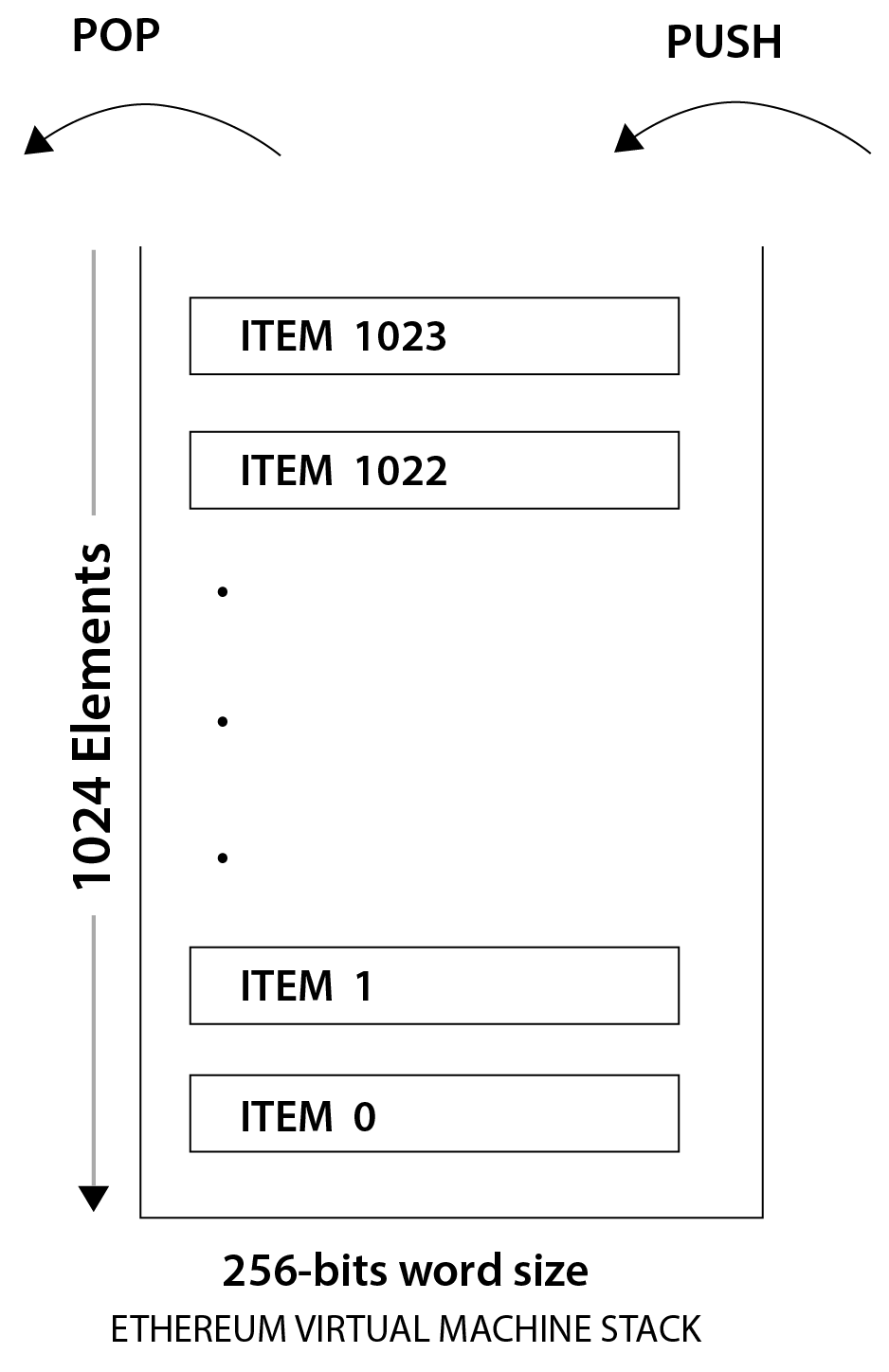
EVM supports exception handling in case of an exception occurring, or if there is insufficient gas or invalid instructions. In such cases, the EVM halts and returns an error to the executing node. The exception when gas is exhausted is commonly known as an Out-of-Gas (OOG) exception.
There are two types of storage available to contracts and EVM: one is memory, and the other is called storage. Memory acts just like RAM, and it is cleared when the code is fully executed. Storage is permanently stored on the blockchain. EVM is fully isolated, and the storage is independent in terms of storage or memory access, as shown in the following diagram:
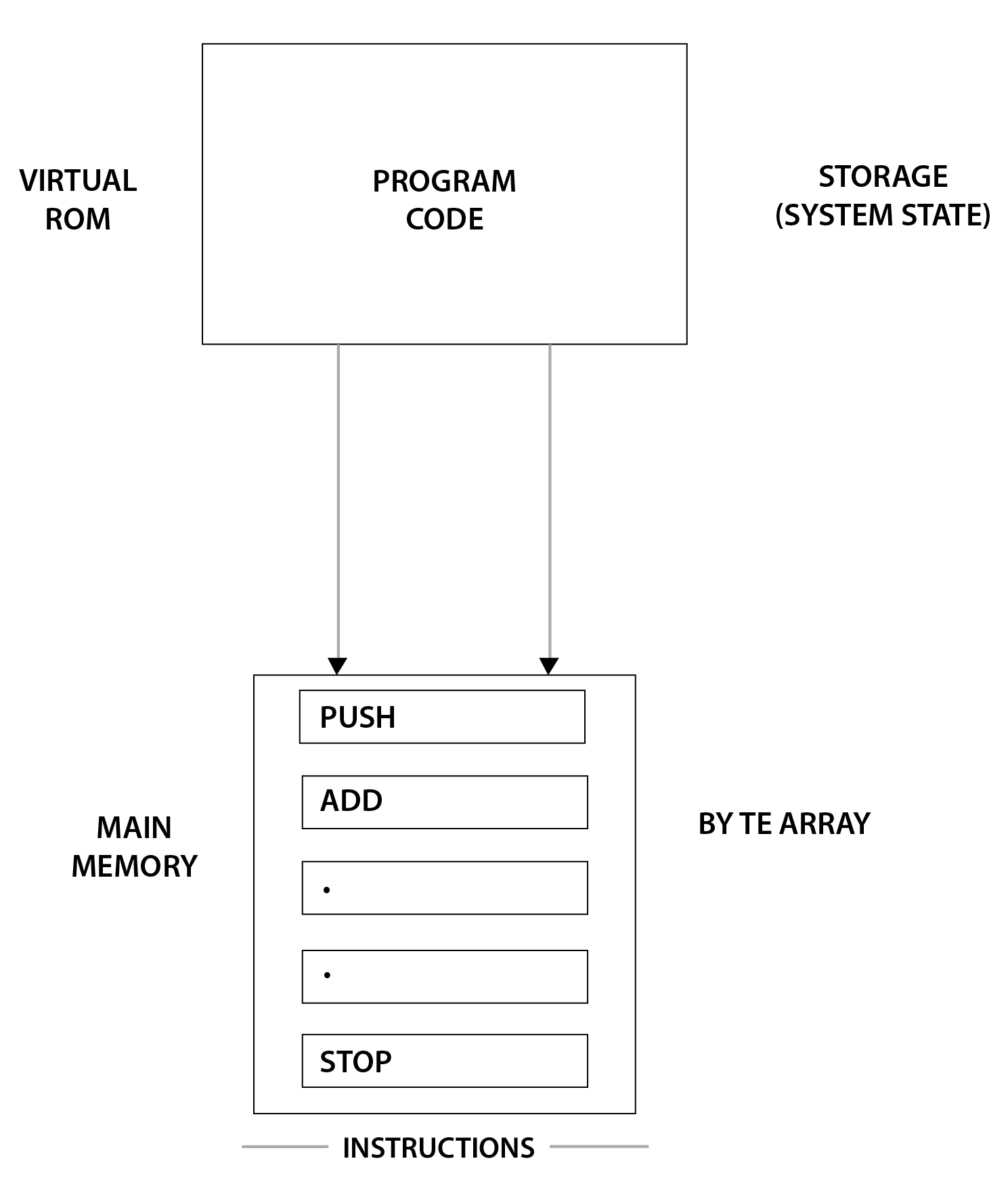
The storage directly accessible by EVM is Word Array, which is non-volatile and is part of the system state. The program code is stored in virtual ROM, which is accessible using the CODECOPY, which basically copies the code from the current environment to the memory.