
As an enterprise-oriented system, Fabric distinguishes between peers and orderers (nodes on a blockchain network) and the organization that owns them. Fabric is meant to create networks between organizations, and the nodes running the blockchain do so as agents of that organization. In this way, each node and its permissions are related to the organization it helps represent. Here is another diagram from Hyperledger:
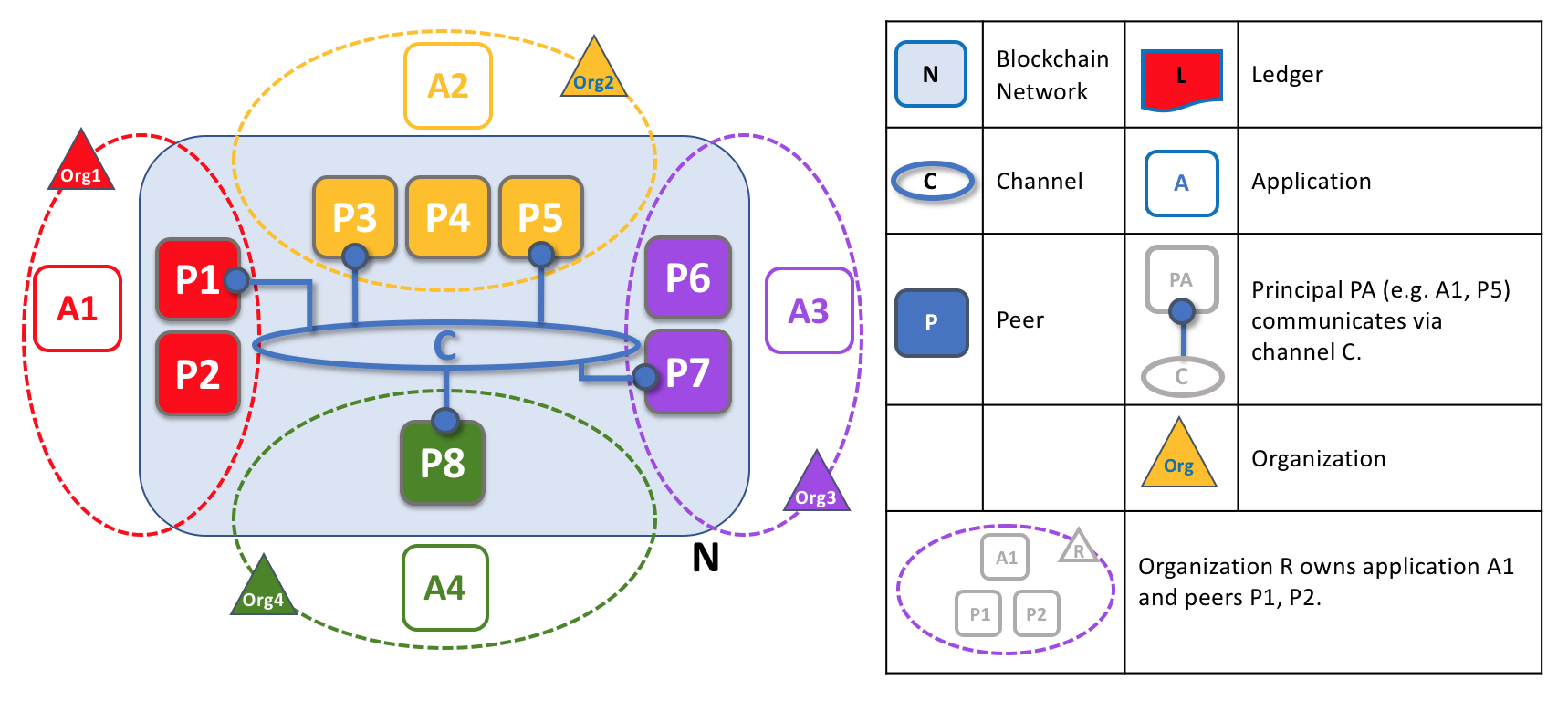
As you can see, each network node operates the blockchain network on behalf of the contributing organization. This is different than networks such as Ethereum and Bitcoin, where the network is created by a set of computers that contribute resources to the network independently, or at least are perceived by the network as doing so independently, no matter who owns them. In Hyperledger Fabric, it is the organizations that create the shared ledger that contributes to the network by contributing resources in the form of peers and ordering nodes. The distinction is subtle but crucial. In most public networks, the idea is to allow computers to coordinate, but in Fabric the idea is to allow companies to coordinate. Owning organizations provides each of their peers a signed digital certificate proving their membership of a certain organization. This certificate then allows each node to connect to the network through an MSP, granting access to network resources. The organizations versus private computers focus brings us to another enterprise-oriented feature of Hyperledger Fabric, one that is necessary for a number of corporate requirements: Private Channels.