Table of Contents for
Ripple Quick Start Guide

Version ebook / Retour

Cover image for bash Cookbook, 2nd Edition Ripple Quick Start Guide by Febin John James Published by Packt Publishing, 2018
  1. Ripple Quick Start Guide
  2. Title Page
  3. Copyright and Credits
  4. Ripple Quick Start Guide
  5. Dedication
  6. About Packt
  7. Why subscribe?
  8. Packt.com
  9. Contributors
  10. About the author
  11. About the reviewer
  12. Packt is searching for authors like you
  13. Table of Contents
  14. Preface
  15. Who this book is for
  16. What this book covers
  17. To get the most out of this book
  18. Download the example code files
  19. Conventions used
  20. Get in touch
  21. Reviews
  22. Getting Started with Ripple
  23. The need for decentralization
  24. Introduction to blockchain
  25. Introduction to Bitcoin
  26. Inefficiencies in payment systems
  27. International money transfer through Bitcoin
  28. Disadvantages of Bitcoin
  29. Ripple
  30. International money transfer through Ripple
  31. The Ripple Protocol
  32. Account creation
  33. Reserve
  34. Transactions
  35. Multisigning
  36. Consensus
  37. Important properties of the consensus protocol
  38. Ledger versions
  39. Validation
  40. Advantages of Ripple
  41. Currency agnostic
  42. Simplified consensus
  43. Low fee
  44. Reduced foreign exchange cost
  45. Pathfinding algorithm
  46. Adaptable cryptography
  47. Anti-spam mechanism
  48. Potential risks of Ripple
  49. Regulatory issues
  50. Trust Issues
  51. Security vulnerabilities
  52. Problems of being an open protocol
  53. Summary
  54. Working with Ripple Currency XRP
  55. Types of wallets
  56. Online wallets
  57. Desktop/mobile wallets
  58. Offline wallets
  59. Hardware wallets
  60. Paper wallets
  61. How do I choose my wallet?
  62. Setting up a Ripple account
  63. Activating the Ripple account
  64. Making an international transfer
  65. Trading XRP
  66. Importing an existing wallet
  67. Setting up an offline wallet
  68. Protecting your Ripples
  69. Don't leave your Ripples on centralized exchanges
  70. Make backups 
  71. Use antivirus software
  72. Disable browser plugins
  73. Store Ripples in multiple wallets 
  74. For big sums, use cold wallets
  75. Use reputable wallets
  76. Important things you must remember
  77. Summary
  78. Applications of Ripple
  79. High speed and low-cost payments 
  80. xCurrent
  81. How does it work?
  82. Advanced payment applications
  83. Cross-currency payments
  84. How does it work?
  85. Checks
  86. How does it work?
  87. Payment channels
  88. How does it work?
  89. Escrow
  90. How does it work?
  91. Initial coin offering
  92. Decentralized exchange
  93. Debunking misconceptions about Ripple
  94. Ripple and XRP are not the same
  95. Funds lockup
  96. No mining
  97. Limited smart contracts
  98. Important things to remember
  99. Summary
  100. Getting Started with the Ripple API
  101. Connecting to the Ripple test network
  102. Setting up the development environment
  103. First Ripple application
  104. Sending money 
  105. Prepare transaction
  106. Sign transaction
  107. Submit transaction
  108. Summary
  109. Developing Applications Using the Ripple API
  110. Sending checks
  111. Cashing checks
  112. Creating a time-held escrow
  113. Creating a conditionally-held escrow
  114. Important things you must remember
  115. Summary
  116. Other Books You May Enjoy
  117. Leave a review - let other readers know what you think

Introduction to Bitcoin

Blockchain's application lies beyond building tamper-proof records. It can be used to make autonomous and automated systems that can work without human intervention. Bitcoin is an automated system that allows for the transfer of cryptoassets (bitcoin), directly between users without any intermediaries.

There are no signup forms to create a wallet. Instead, user keys are generated using cryptography. Here, there are two keys: the public key and the private key. The public key is like a username and the private key is similar to a password. These keys look like a long string with a combination of letters and numbers (for example, 18XgQU8FJbi8Vje6658hUKjeKjbbDS6eDa).

Privacy is one of the key features of Bitcoin. Since no user information is provided to the Bitcoin system, the system doesn't know any details about its users. Unless users expose their public key, they remain anonymous.

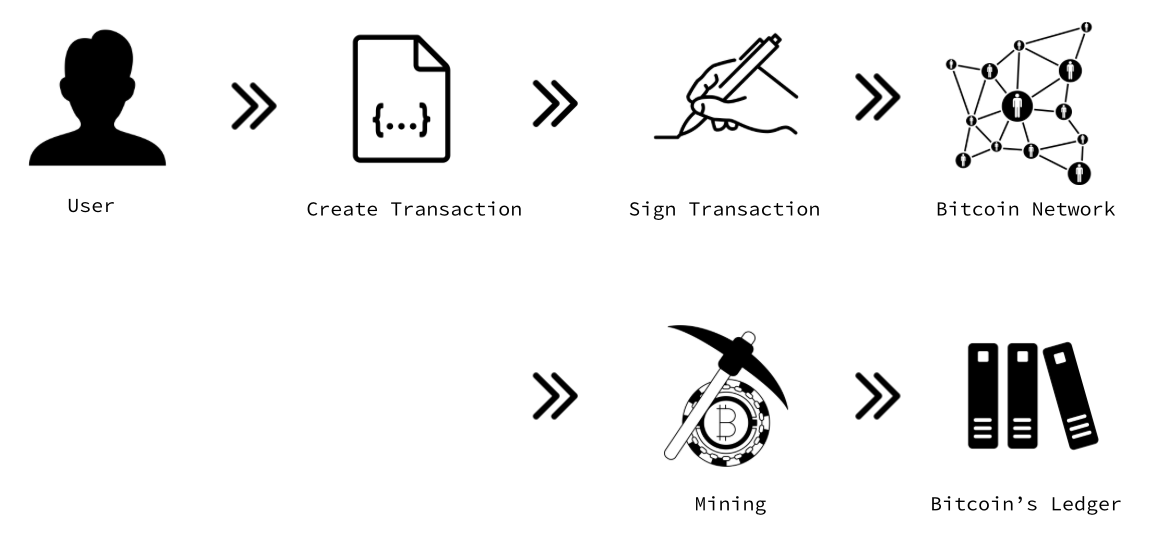
If a user wants to send money to another user, the sender needs to create a message, sign it and broadcast it. The broadcast message is later verified and committed to the ledger.

The following image depicts how a transaction makes its way to Bitcoin's tamper-proof ledger:
If Sosha wants to send 5 Bitcoin to Sneha, the message would look like the following:

Message: I am sending 5 Bitcoin to Sneha
Signature: Sosha's signature
Public Key: Sosha's public key

The signature is generated using a cryptographic function that takes Sosha's public key, private key, and message as input. Then, it generates the signature as output.

Now, anyone on the bitcoin network can verify it with another crypto function, which takes the public key, signature, and message as input. If the message is modified, the cryptographic function will throw an error.

Every 10 minutes, the bitcoin network groups new transactions as a block. This new block is only added to the blockchain once it is mined. To mine the block, the system creates a computational puzzle that should be solved by the miners. Here, humans don't solve the puzzles; instead, mining devices do.

Miners compete to solve this puzzle, and the first miner who solves this puzzle is rewarded with x number of Bitcoins. Presently, the reward is around 12.5 Bitcoin. These coins are minted out of thin air, and this is how new coins are added to the system.

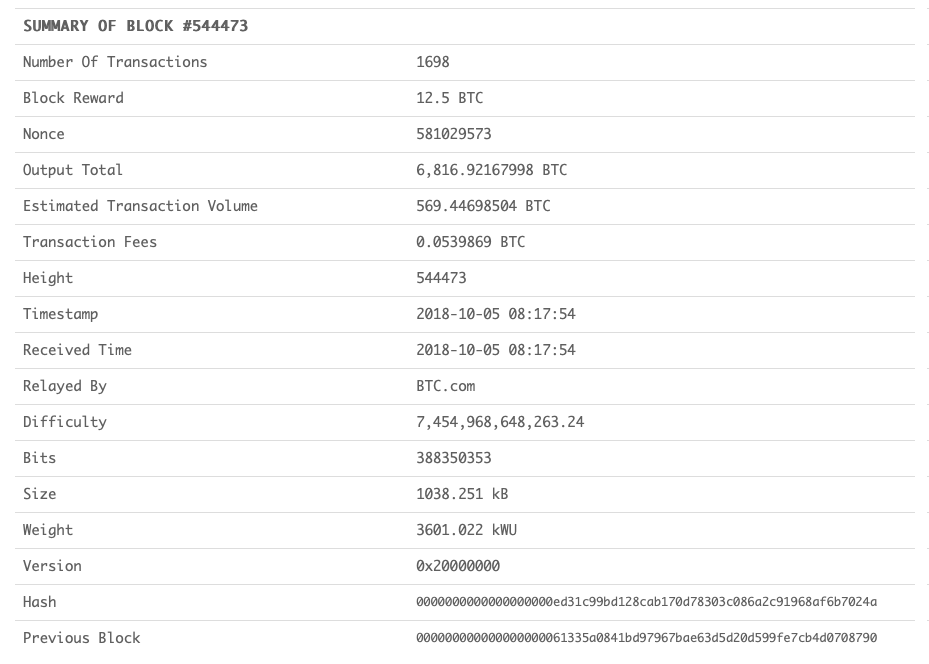
Once a block is mined, it is permanently added to the blockchain. These blocks of transactions are visible to anyone. This results in transparency that, in turn, results in trust. Anyone can look up any blocks on the blockchain and also the transaction that occurred in the block. Here's the summary of block #544473:
Censorship resistance is a key feature of this innovation. Since there are no central servers, governments cannot enforce a ban on the system. To prevent bitcoin systems from functioning, all of its users' computers must be shut down. Since there are millions of such nodes in the network, it is almost impossible to achieve this.