Table of Contents for
Designing for How People Think
 Designing for How People Think
Published by
O'Reilly Media, Inc., 2019
Designing for How People Think
Published by
O'Reilly Media, Inc., 2019
- Cover
- Title Page
- Copyright
- 01 Rethinking "The" Experience
- 02 The Six Minds of User Experience
- 03 In the Blink of an Eye- Vision, Attention, and Automaticity
- 04 Wayfinding- Where Am I?
- 05 Memory:Semantics
- 06 Language- I Told You So
- 07 Decision-Making and Problem Solving- Enter Consciousness Stage Left
- 08 Emotion- Logical Decision Making Meets Its Match
- 09 User Research- Contextual Interviews
- 10 Vision- Are You Looking at Me?
- 11 Language- Did They Just Say That?
- 12 Wayfinding- How Do You Get There?
- 13 Memory- Expectations and Filling in Gaps
- 14 Decision-Making - Following the Breadcrumbs
- 15 Emotion- The Unspoken Reality
- 16 Sense-Making
- 17 Putting the Six Minds to work- Appeal, Enhance, Awaken
- 18 Succeed Fast, Succeed Often
- 19 Now see what you’ve done?
- 20 How To Make a Better Human
- 20 How To Make a Better Human
Chapter 2. The Six Minds of User Experience
The six minds of experience
Surely it is the case that there are hundreds of cognitive processes happening every second in your brain. But to simplify to a level that might be more relevant to product and service design, I propose that we limit ourselves to a subset that we can realistically measure and influence.
What are these processes and what are their functions? Let’s use a concrete example to explain them. Consider the act of purchasing a chair suitable for your mid-century modern house. Perhaps you might be interested in a classic design from that period, like the Eames’ chair and ottoman below. You are seeking to buy this online and browsing an ecommerce site.
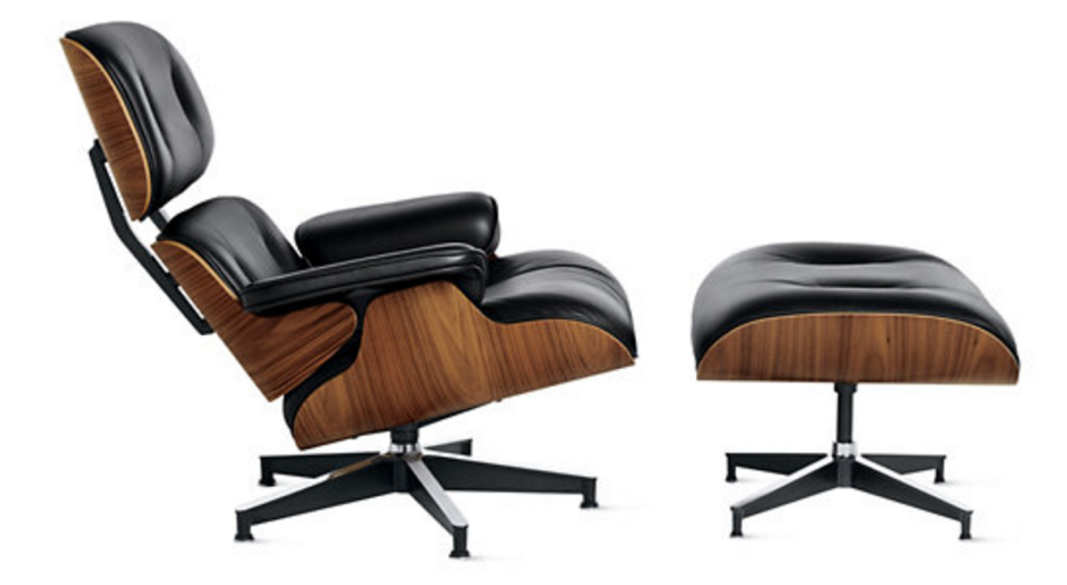
Figure 2.1: Eames Chair
1. Vision, Attention, and Automaticity
As you first land on the furniture website to look for chairs, your eyes scan the page to make sure you are on the right site. Your eyes might scan the page for words such as furniture, or for the word “chairs”, from which you might look for the appropriate category of chair, or you might choose to look for the search option to type in “Eames chair”. If you don’t find chair, you look for other words that might represent a category that includes chair. Let’s suppose on scanning the options below, you pick the “Living” option.

Figure 2.2: Navigation from Design within Reach
2. Wayfinding
Once you believe you’ve found a way forward into the site, the next task is to understand how to navigate the virtual space. While in the physical world we’ve learned (or hopefully have learned!) the geography around our homes and how to get to some of our most frequented locations like our favorite grocery store or coffee shop, the virtual world may not always present our minds with the navigational cues that our brains are designed for — notably three-dimensional space.
We often aren’t exactly sure where we are within a website, app, or virtual experience. Nor do we always know how to navigate around in a virtual space. On a webpage you might think to click on a term, like “Living” in the option above. But in other cases like Snapchat or Instagram, many people over the age of 18 might struggle to understand how to get around by swiping, clicking, or even waving their phone. Both understanding where you are in space (real or virtual) and how you can navigate your space (moving in 3D, swiping or tapping on phones) are critical to a great experience.
3. Language
I find when I’m around interior designers, I start to wonder if they speak a different language altogether than I do. The words in a conceptual category such as furniture can vary dramatically based on your level of expertise. If you are an interior design expert, you might masterfully navigate a furniture site, because you know what distinguishes an egg chair, swan chair, diamond chair, and lounge chair. In contrast, if you are more novice to the world of interior design, you might need to Google all these names to figure out what they are talking about! To create a great experience, we must understand the words our audience uses and meet them at the appropriate level. Asking experts to simply look up the category “chair” (far too imprecise) is about as helpful as asking a non-expert about the differences between dorsolateral prefrontal cortex (DLPFC) and anterior cingulate gyrus (both of which are neuroanatomical terms).
4. Memory
As I navigate an e-commerce site, I also have expectations about how it works. For example, I might expect that an e-commerce site will have search (and search results), product category pages (chairs), product pages (a specific chair), and a checkout process. The fact that you have expectations is true for any number of concepts. We automatically build mental expectations about people, places, processes, and more. As product designers, we need to make sure we understand what our customers’ expectations are, and anticipate confusions that might arise if we deviate from those norms (e.g., think about how you felt the first time you left a Lyft or Uber or limousine without physically paying the driver).
5. Decision-Making
Ultimately you are seeking to accomplish your goals and make decisions. Should you buy this chair? There are any number of questions that might go through your head as you make that decision. Would this look good in my living room? Can I afford it? Would it fit through the front door? At nearly $5,000, what happens if it is scratched or damaged during transit? Am I getting the best price? How should I maintain it? As product and service managers and designers, we need to think about all the steps along an individual customer’s mental journey and be ready to answer the questions that come up along the way.
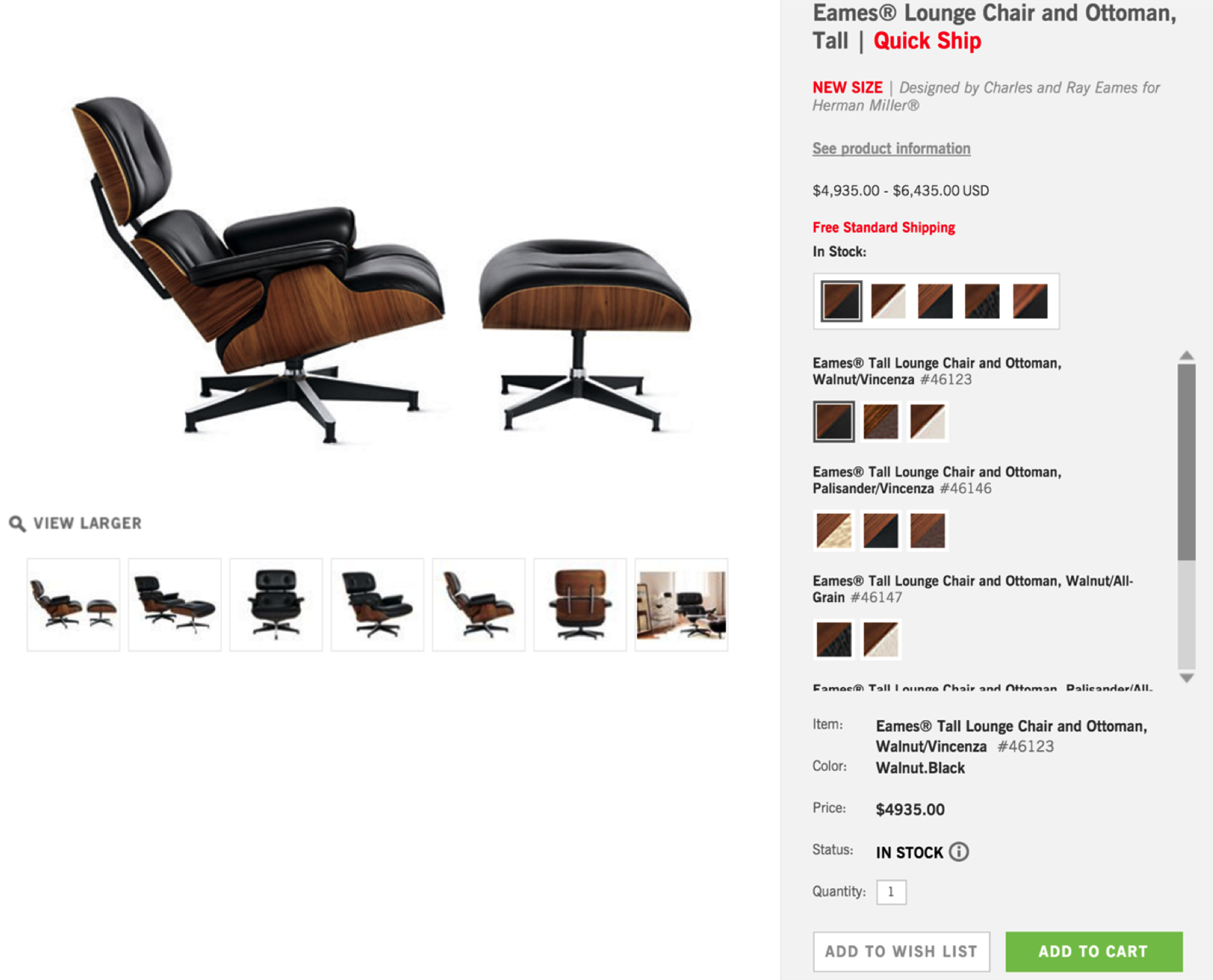
Figure 2.3: Product detail page from Design with Reach
6. Emotion
While we may like to think we can be like Spock from Star Trek and make decisions completely logically, it has been well documented that a myriad of emotions affect our experience and thinking. Perhaps as you look at this chair you are thinking about how your friends would be impressed, and thinking that might show your status. Perhaps you’re thinking “How pretentious!” or “$5,000 for a chair — How am I going to pay for that, rent and food?!” and starting to panic. Identifying underlying emotions and deep-seated beliefs will be critical to building a great experience.
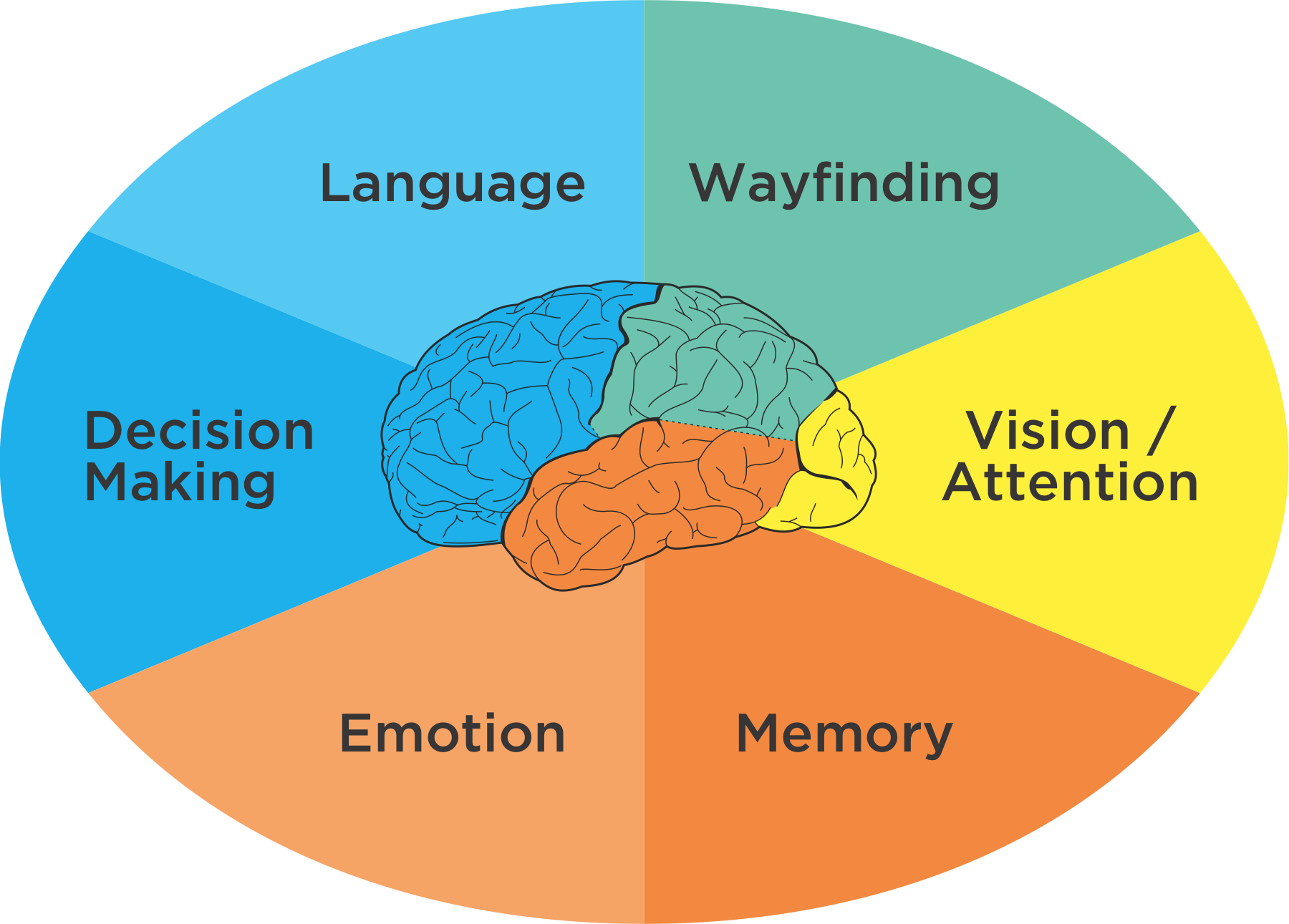
Figure 2.4: Six Minds of Experience
Together, these very different processes, which are generally located in unique brain areas, come together to create what you perceive as a singular experience. While my fellow cognitive neuropsychologists would quickly agree that this is an oversimplification of both human anatomy and processes, there are some reasonable overarching themes that make this a level at which we can connect product design and neuroscience.
I think we all might agree that “an experience” is not singular at all, but rather is multidimensional, nuanced, and composed of many brain processes and representations. It is multisensory. Customer experience doesn’t happen on a screen, it happens in the mind.
“The customer experience doesn’t happen on a screen, it happens in the mind.”
Activity
Let me recommend you take a brief pause in your reading, and go to an e-commerce website — ideally, one that you’ve rarely used — and search for books on the topic of “customer experience.” When you do, do so in a new and self-aware state:
- 1. Vision: Where did your eyes travel on the site? What were you looking for (e.g., what images, colors, words)?
- 2. Wayfinding: Did you know where you were on the site and how to navigate it? Were you ever uncertain? Why?
- 3. Language: What words were you looking for? Did you experience terms you didn’t understand, or were the categories ever too general?
- 4. Memory: How were your expectations about how the site would work violated?
- 5. Decision-Making: What were the micro-decisions you made along the way as you sought to accomplish your goal of purchasing a book?
- 6. Emotions: What concerns did you have? What might stop you from making a purchase (e.g., security, trust)?
Now that you have some sense of the mental representations you need to be aware of, you might ask: How do I, as a product manager, not a psychologist, determine where someone is looking and what they are looking for? How do I know what my product audience’s expectations are? How can I expose deep-seated emotions? We’ll get there in Part 2 of the book, but for right now I want to agree on what we mean by vision/attention, wayfinding, memory, language, emotion and decision making. I want you to know more about each of these so you can recognize these processes “in the wild” as you observe and interview your customers.