Table of Contents for
DK Eyewitness Travel Guide Scotland
 DK Eyewitness Travel Guide Scotland
Published by
DK Eyewitness Travel, 2019
DK Eyewitness Travel Guide Scotland
Published by
DK Eyewitness Travel, 2019
- COVER
- Half Title
- CONTENTS
- DISCOVER SCOTLAND
- Welcome to Scotland
- Reasons to Love Scotland
- Explore Scotland
- Discover Itineraries
- Scotland Itineraries
- 7 Days On the North Coast 500
- Scotland for Outdoor Adventures
- Scotland for Wildlife Encounters
- Scotland for Spectacular Castles
- Scotland for Bookworms
- Scotland for Art Lovers
- Scotland for Music Lovers
- Scotland for Foodies
- Scottish Spirit
- Scotland for Families
- Scotland for Beachgoers
- Scotland on Screen
- A Year in Scotland
- A Brief History
- EXPERIENCE SCOTLAND
- Edinburgh
- Area Map - Edinburgh
- 2 Days
- Edinburgh’s Summer Festivals
- Quiet Escapes Edinburgh’s
- Edinburgh Castle
- The Royal Mile
- Calton Hill
- National Museum of Scotland
- Scottish National Gallery
- Experience More
- A Short Walk - New Town
- A Long Walk - Water of Leith Walkway
- Southern Scotland
- Area Map - Southern Scotland
- Culzean Castle and Country Park
- Abbotsford
- Experience More
- Glasgow
- Area Map - Glasgow
- 2 Days in Glasgow
- Glasgow’s Industrial Heritage
- Basilica di San Marco
- Kelvingrove Art Gallery and Museum
- Experience More
- Central and Northeast Scotland
- Area Map - Central and Northeast Scotland
- The Veneto and Friuli
- Scone Palace
- Loch Lomond and the Trossachs National Park
- Stirling Castle
- Experience More
- The Highlands and Islands
- Area Map - The Highlands and Islands
- Highland Traditions and Culture
- Remote Island Getaways
- Ben Nevis
- Cairngorms National Park
- The Great Glen
- Isle of Skye
- Orkney Islands
- Shetland Islands
- Outer Hebrides
- Experience More
- A Driving Tour - Road to the Isles
- NEED TO KNOW
- Before You Go
- Getting Around
- Practical Information
- Scottish Vocabulary
- ACKNOWLEDGEMENTS AND IMPRINTS
- Copyright
- Navigational Contents
The Highlands and Islands
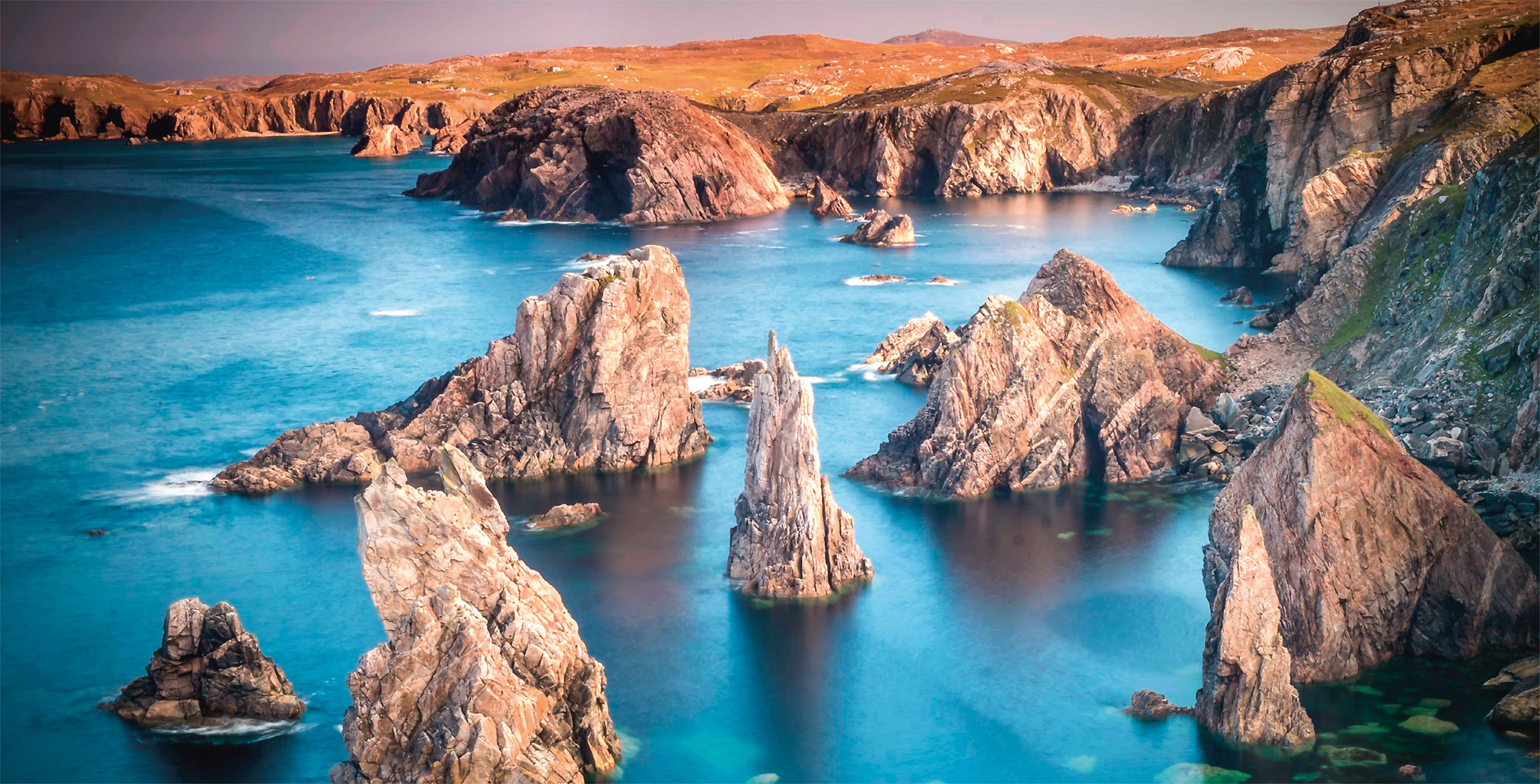
t Cliffs and sea stacks near Mangersta, on the west coast of Lewis
Experience The Highlands and Islands
Most of the stock images of Scottishness – clans and tartans, whisky and porridge, bagpipes and heather – originate in the Highlands, and enrich the popular picture of Scotland as a whole. But for many centuries the Gaelic-speaking, cattle-raising Highlanders had little in common with their southern neighbours.
Clues to the non-Celtic ancestors of the Highlanders lie scattered across the Highlands and islands in the form of stone circles, brochs and cairns spanning over 5,000 years. By the end of the 6th century, the Gaelic-speaking Celts had arrived from Ireland, as had St Columba, who taught Christianity to the monastic community he established on the island of Iona.
For over 1,000 years, Celtic Highland society was founded on a clan system, built on family ties to create loyal groups dependent on a feudal chief. However, the clans were systematically broken up by England after 1746, following the defeat of the Jacobite attempt on the British crown led by Bonnie Prince Charlie.
A more romantic vision of the Highlands began to emerge in the early 19th century, due largely to Sir Walter Scott’s novels and poetry depicting the majesty and grandeur of a country previously considered merely poverty-stricken and barbaric. Another great popularizer was Queen Victoria, whose passion for Balmoral Castle helped establish the trend for acquiring Highland sporting estates. But behind the sentimentality lay harsh economic realities that drove generations of Highland farmers to seek a new life overseas.