Table of Contents for
DK Eyewitness Travel Guide Scotland
 DK Eyewitness Travel Guide Scotland
Published by
DK Eyewitness Travel, 2019
DK Eyewitness Travel Guide Scotland
Published by
DK Eyewitness Travel, 2019
- COVER
- Half Title
- CONTENTS
- DISCOVER SCOTLAND
- Welcome to Scotland
- Reasons to Love Scotland
- Explore Scotland
- Discover Itineraries
- Scotland Itineraries
- 7 Days On the North Coast 500
- Scotland for Outdoor Adventures
- Scotland for Wildlife Encounters
- Scotland for Spectacular Castles
- Scotland for Bookworms
- Scotland for Art Lovers
- Scotland for Music Lovers
- Scotland for Foodies
- Scottish Spirit
- Scotland for Families
- Scotland for Beachgoers
- Scotland on Screen
- A Year in Scotland
- A Brief History
- EXPERIENCE SCOTLAND
- Edinburgh
- Area Map - Edinburgh
- 2 Days
- Edinburgh’s Summer Festivals
- Quiet Escapes Edinburgh’s
- Edinburgh Castle
- The Royal Mile
- Calton Hill
- National Museum of Scotland
- Scottish National Gallery
- Experience More
- A Short Walk - New Town
- A Long Walk - Water of Leith Walkway
- Southern Scotland
- Area Map - Southern Scotland
- Culzean Castle and Country Park
- Abbotsford
- Experience More
- Glasgow
- Area Map - Glasgow
- 2 Days in Glasgow
- Glasgow’s Industrial Heritage
- Basilica di San Marco
- Kelvingrove Art Gallery and Museum
- Experience More
- Central and Northeast Scotland
- Area Map - Central and Northeast Scotland
- The Veneto and Friuli
- Scone Palace
- Loch Lomond and the Trossachs National Park
- Stirling Castle
- Experience More
- The Highlands and Islands
- Area Map - The Highlands and Islands
- Highland Traditions and Culture
- Remote Island Getaways
- Ben Nevis
- Cairngorms National Park
- The Great Glen
- Isle of Skye
- Orkney Islands
- Shetland Islands
- Outer Hebrides
- Experience More
- A Driving Tour - Road to the Isles
- NEED TO KNOW
- Before You Go
- Getting Around
- Practical Information
- Scottish Vocabulary
- ACKNOWLEDGEMENTS AND IMPRINTS
- Copyright
- Navigational Contents
Glasgow
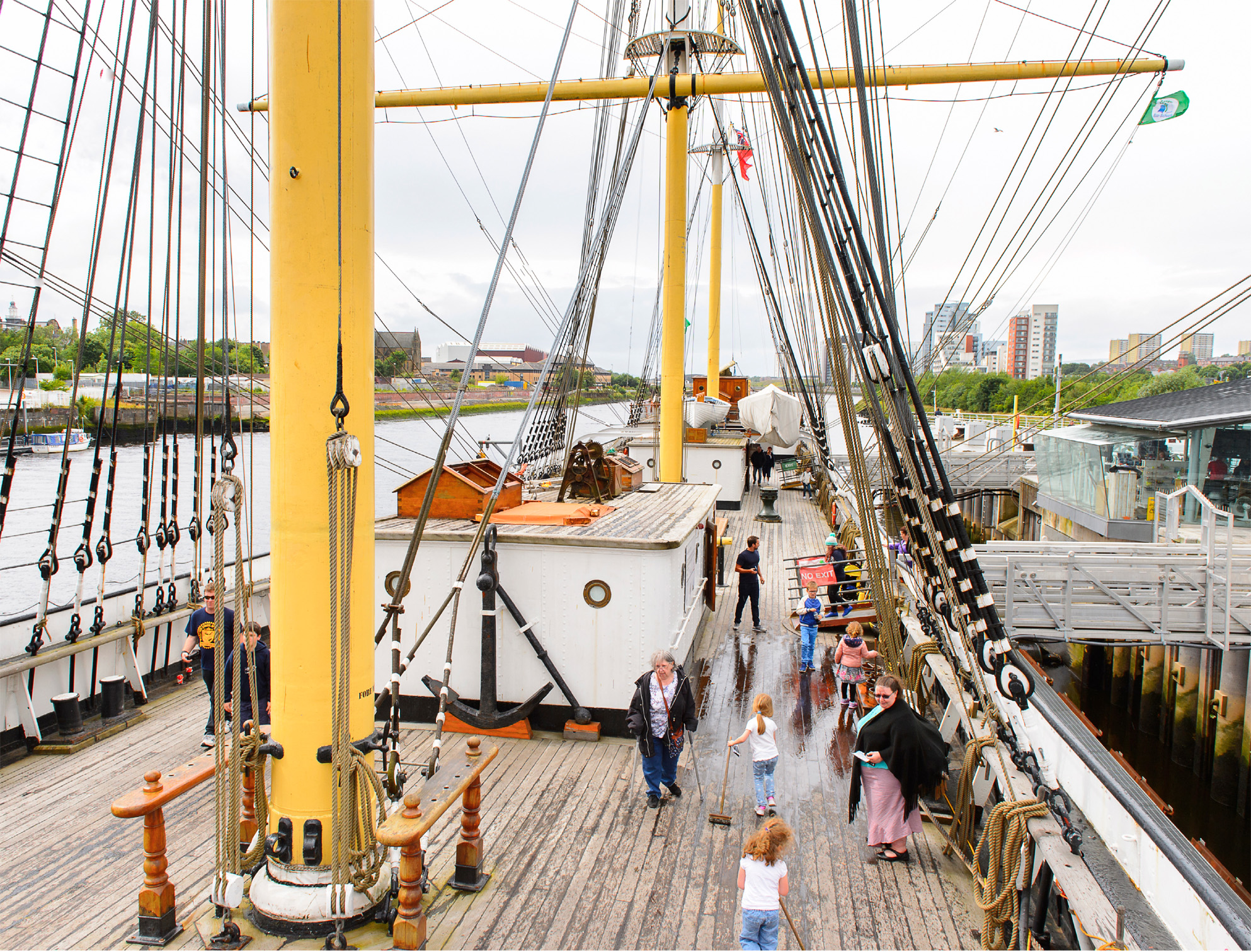
t Three masts of the Tall Ship Glenlee looming high above the Clyde
Experience Glasgow
Glasgow’s city centre, on the north bank of the River Clyde, has been occupied since ancient times. The Romans already had a presence in the area some 2,000 years ago, and there was a religious community here from the 6th century. Records show Glasgow’s growing importance as a merchant town from the 12th century onwards.
Historic buildings such as Provand’s Lordship, a 15th-century town house, remind visitors of its pre-industrial roots, but modern Glasgow grew from the riches of the British Empire and the Industrial Revolution. In the 18th century Glasgow imported rum, sugar and tobacco from the colonies, while in the 19th century it reinvented itself as a cotton-manufacturing centre. It then became a site for shipbuilding and heavy engineering works, attracting many incomers from poverty-stricken districts in the Scottish Highlands and islands and Ireland in the process.
Between the 1780s and the 1880s the population exploded from around 40,000 to over 500,000. The city boundaries expanded exponentially and, despite an economic slump between the two world wars, Glasgow clung to its status as an industrial giant until the 1970s, when its traditional skills were no longer needed. The city has since bounced back; it was named European Capital of Sport in 2003 and hosted the 2014 Commonwealth Games, while a £500 million project at Glasgow Harbour has transformed the city’s old shipyards and dockland into a hub for commercial, residential and leisure usage.