Table of Contents for
DK Eyewitness Travel Guide Scotland
 DK Eyewitness Travel Guide Scotland
Published by
DK Eyewitness Travel, 2019
DK Eyewitness Travel Guide Scotland
Published by
DK Eyewitness Travel, 2019
- COVER
- Half Title
- CONTENTS
- DISCOVER SCOTLAND
- Welcome to Scotland
- Reasons to Love Scotland
- Explore Scotland
- Discover Itineraries
- Scotland Itineraries
- 7 Days On the North Coast 500
- Scotland for Outdoor Adventures
- Scotland for Wildlife Encounters
- Scotland for Spectacular Castles
- Scotland for Bookworms
- Scotland for Art Lovers
- Scotland for Music Lovers
- Scotland for Foodies
- Scottish Spirit
- Scotland for Families
- Scotland for Beachgoers
- Scotland on Screen
- A Year in Scotland
- A Brief History
- EXPERIENCE SCOTLAND
- Edinburgh
- Area Map - Edinburgh
- 2 Days
- Edinburgh’s Summer Festivals
- Quiet Escapes Edinburgh’s
- Edinburgh Castle
- The Royal Mile
- Calton Hill
- National Museum of Scotland
- Scottish National Gallery
- Experience More
- A Short Walk - New Town
- A Long Walk - Water of Leith Walkway
- Southern Scotland
- Area Map - Southern Scotland
- Culzean Castle and Country Park
- Abbotsford
- Experience More
- Glasgow
- Area Map - Glasgow
- 2 Days in Glasgow
- Glasgow’s Industrial Heritage
- Basilica di San Marco
- Kelvingrove Art Gallery and Museum
- Experience More
- Central and Northeast Scotland
- Area Map - Central and Northeast Scotland
- The Veneto and Friuli
- Scone Palace
- Loch Lomond and the Trossachs National Park
- Stirling Castle
- Experience More
- The Highlands and Islands
- Area Map - The Highlands and Islands
- Highland Traditions and Culture
- Remote Island Getaways
- Ben Nevis
- Cairngorms National Park
- The Great Glen
- Isle of Skye
- Orkney Islands
- Shetland Islands
- Outer Hebrides
- Experience More
- A Driving Tour - Road to the Isles
- NEED TO KNOW
- Before You Go
- Getting Around
- Practical Information
- Scottish Vocabulary
- ACKNOWLEDGEMENTS AND IMPRINTS
- Copyright
- Navigational Contents
⌂ 6 km (4 miles) west of Maybole, Ayrshire 3 Ayr, then bus # Castle: Apr–Oct: 10:30am–5pm (last entry 4pm); grounds: 9am–dusk daily year-round ∑ nts.org.uk
Standing on a cliff’s edge in an extensive parkland estate, the late-16th-century keep of Culzean (pronounced Cullayn) is a masterpiece in a land full of magnificent castles, with a glorious estate to match.
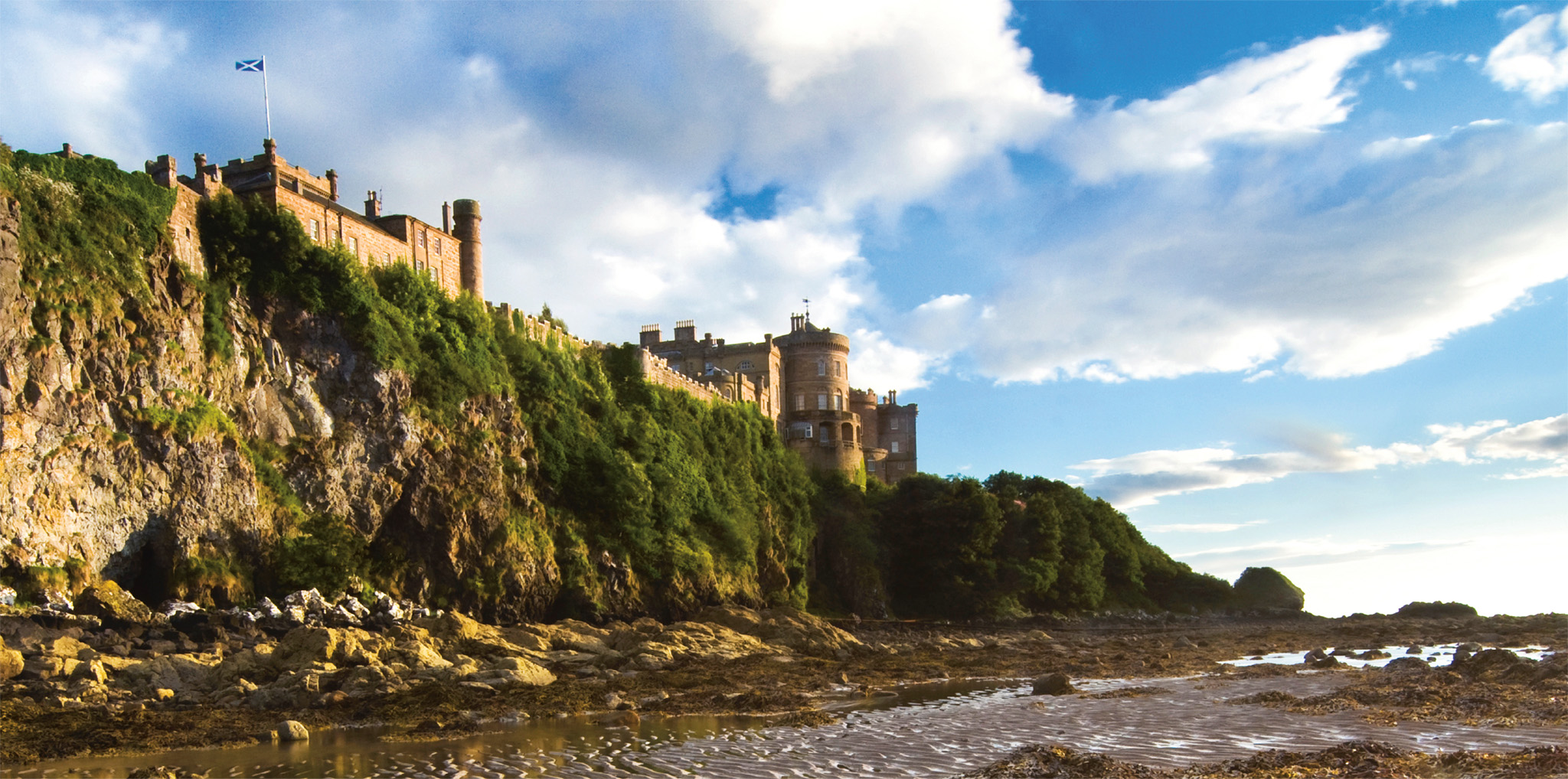
t Culzean Castle’s iconic turrets as seen from the beach below
Formerly a crumbling fortified tower house, Culzean Castle was transformed by the great Scots architect Robert Adam into a mansion of sumptuous proportions and elegance. Work began in 1777 and lasted almost 20 years, with no expense spared in the decoration and craftsmanship of this breathtaking clifftop fortress. Culzean was fully restored and gifted to the nation in the 1970s.
The Castle Grounds
The grounds became Scotland’s first public country park in 1969 and, with farming flourishing alongside ornamental gardens, they reflect both the leisure and everyday activities of life on a great country estate. Free tours depart from the Home Farm visitor centre, or you can go it alone – the views across the water to the mountains of Arran are glorious from the clifftop and shoreline trails.
Experience Southern Scotland
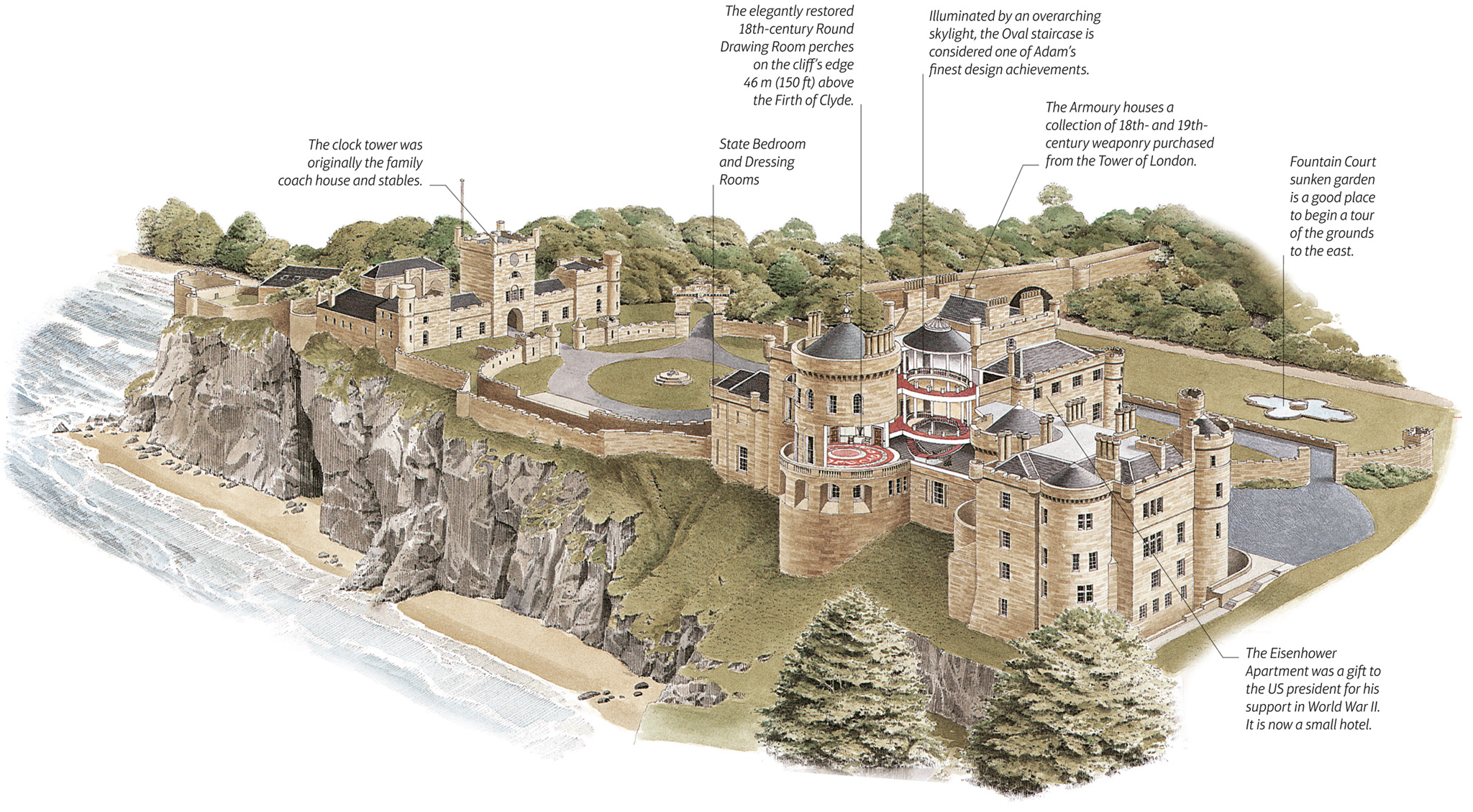
t Illustration of Culzean Castle perched on its magnificent clifftop setting
Did You Know?
During the castle’s prime, the caves below were used for smuggling contraband.
Oranges and Lemons
Camellia House, Culzean’s elegant stone-framed orangery, was restored in 2018 and replanted with clementine, lime, lemon and orange trees. Built in around 1840, it was designed by John Patterson, a disciple of Robert Adam. Orangeries in this style, built in emulation of those created for 17th-century monarchs like Louis XIV of France, were enviable status symbols for wealthy 19th-century notables.