Table of Contents for
DK Eyewitness Travel Guide Scotland
 DK Eyewitness Travel Guide Scotland
Published by
DK Eyewitness Travel, 2019
DK Eyewitness Travel Guide Scotland
Published by
DK Eyewitness Travel, 2019
- COVER
- Half Title
- CONTENTS
- DISCOVER SCOTLAND
- Welcome to Scotland
- Reasons to Love Scotland
- Explore Scotland
- Discover Itineraries
- Scotland Itineraries
- 7 Days On the North Coast 500
- Scotland for Outdoor Adventures
- Scotland for Wildlife Encounters
- Scotland for Spectacular Castles
- Scotland for Bookworms
- Scotland for Art Lovers
- Scotland for Music Lovers
- Scotland for Foodies
- Scottish Spirit
- Scotland for Families
- Scotland for Beachgoers
- Scotland on Screen
- A Year in Scotland
- A Brief History
- EXPERIENCE SCOTLAND
- Edinburgh
- Area Map - Edinburgh
- 2 Days
- Edinburgh’s Summer Festivals
- Quiet Escapes Edinburgh’s
- Edinburgh Castle
- The Royal Mile
- Calton Hill
- National Museum of Scotland
- Scottish National Gallery
- Experience More
- A Short Walk - New Town
- A Long Walk - Water of Leith Walkway
- Southern Scotland
- Area Map - Southern Scotland
- Culzean Castle and Country Park
- Abbotsford
- Experience More
- Glasgow
- Area Map - Glasgow
- 2 Days in Glasgow
- Glasgow’s Industrial Heritage
- Basilica di San Marco
- Kelvingrove Art Gallery and Museum
- Experience More
- Central and Northeast Scotland
- Area Map - Central and Northeast Scotland
- The Veneto and Friuli
- Scone Palace
- Loch Lomond and the Trossachs National Park
- Stirling Castle
- Experience More
- The Highlands and Islands
- Area Map - The Highlands and Islands
- Highland Traditions and Culture
- Remote Island Getaways
- Ben Nevis
- Cairngorms National Park
- The Great Glen
- Isle of Skye
- Orkney Islands
- Shetland Islands
- Outer Hebrides
- Experience More
- A Driving Tour - Road to the Isles
- NEED TO KNOW
- Before You Go
- Getting Around
- Practical Information
- Scottish Vocabulary
- ACKNOWLEDGEMENTS AND IMPRINTS
- Copyright
- Navigational Contents
Glasgow’s
Industrial Heritage
Coal, iron and steam turned Glasgow from a prosperous merchant city into the British Empire’s greatest industrial centre. Although heavy industry declined in the 20th century, its legacy is still a source of pride.
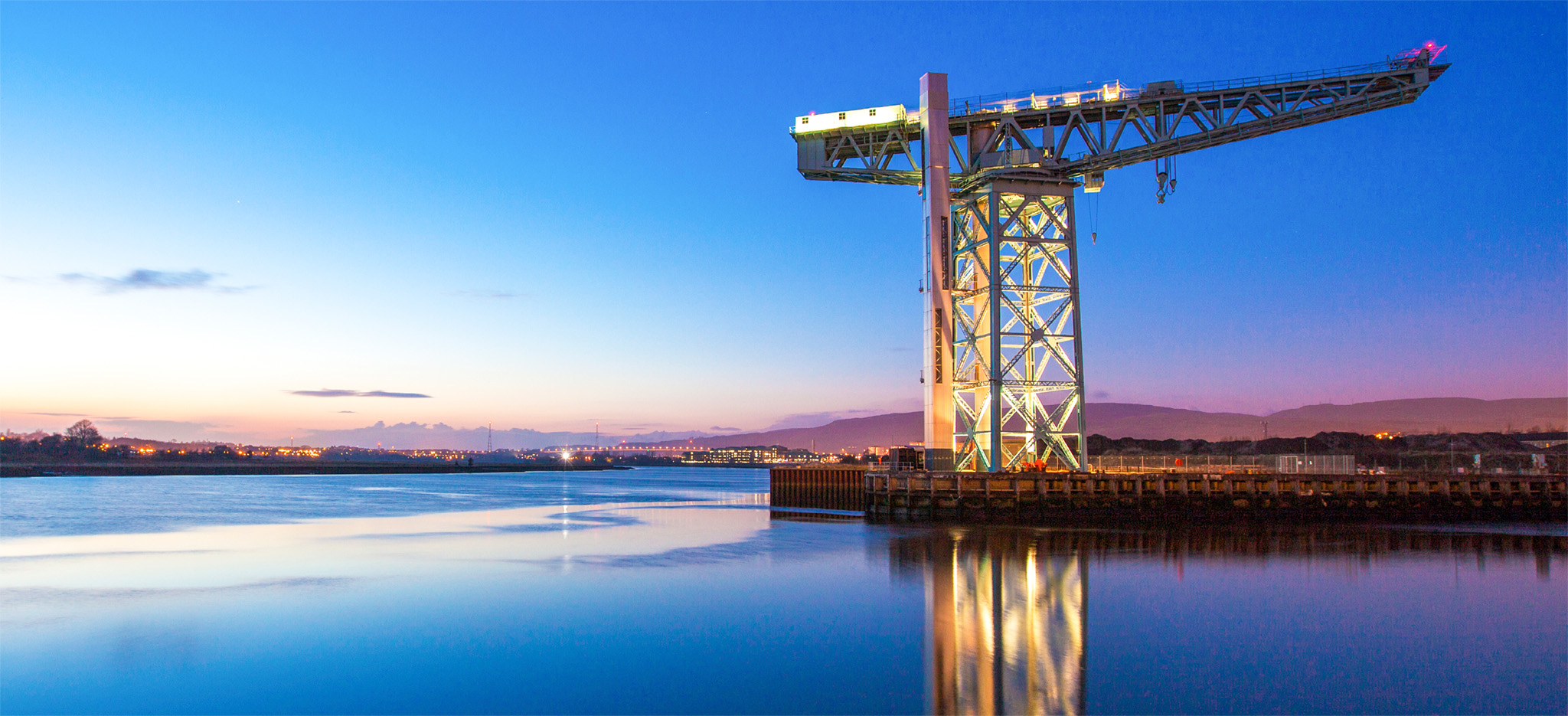
t Colossal Titan Crane and thrillseekers bungee jumping from the top
Clydebank Colossus
The towering giant steel structure of the Titan Crane is Glasgow’s gritty answer to the Eiffel Tower. Built in 1906 to hoist massive loads on to ships for export worldwide, visitors can now enjoy awesome views from the top-level viewing platform, or swing, bungee-jump and abseil from its giant boom 50 m (164 ft) above the river.
All Aboard Glenlee
Glenlee is one of the last great Clyde-built sailing ships. Meet volunteers in period costume and imagine what life was like as a voyager aboard this three-masted seafaring vessel more than a century ago. Launched in 1896 she circumnavigated the globe four times before being rescued from dereliction in 1992. The ship is now moored next to the futuristic Riverside Museum.
A Steam Cruise on the Clyde
Take a cruise aboard the Waverley paddle steamer to experience the age of steam first-hand. Built on the Clyde in 1947, the last seagoing paddle steamer in the world once carried Glasgow folk to ports like Ayr, Campbeltown , Rothesay and Helensburgh along the Firth of Clyde.
Sugar, Slaves and Tobacco
Glasgow has only recently started to come to terms withthe unsavoury sources of its early wealth. Much of the sugar and tobacco that enriched the city’s 18th-century merchants came from slave plantations in America and the Caribbean. When slavery was finally abolished in 1833, plantation oweners reinvested their windfall in the new industrial economy.
Did You Know?
Glasgow was a hub for manufacturing ships and armaments during the first and second world wars.