Table of Contents for
DK Eyewitness Travel Guide Scotland
 DK Eyewitness Travel Guide Scotland
Published by
DK Eyewitness Travel, 2019
DK Eyewitness Travel Guide Scotland
Published by
DK Eyewitness Travel, 2019
- COVER
- Half Title
- CONTENTS
- DISCOVER SCOTLAND
- Welcome to Scotland
- Reasons to Love Scotland
- Explore Scotland
- Discover Itineraries
- Scotland Itineraries
- 7 Days On the North Coast 500
- Scotland for Outdoor Adventures
- Scotland for Wildlife Encounters
- Scotland for Spectacular Castles
- Scotland for Bookworms
- Scotland for Art Lovers
- Scotland for Music Lovers
- Scotland for Foodies
- Scottish Spirit
- Scotland for Families
- Scotland for Beachgoers
- Scotland on Screen
- A Year in Scotland
- A Brief History
- EXPERIENCE SCOTLAND
- Edinburgh
- Area Map - Edinburgh
- 2 Days
- Edinburgh’s Summer Festivals
- Quiet Escapes Edinburgh’s
- Edinburgh Castle
- The Royal Mile
- Calton Hill
- National Museum of Scotland
- Scottish National Gallery
- Experience More
- A Short Walk - New Town
- A Long Walk - Water of Leith Walkway
- Southern Scotland
- Area Map - Southern Scotland
- Culzean Castle and Country Park
- Abbotsford
- Experience More
- Glasgow
- Area Map - Glasgow
- 2 Days in Glasgow
- Glasgow’s Industrial Heritage
- Basilica di San Marco
- Kelvingrove Art Gallery and Museum
- Experience More
- Central and Northeast Scotland
- Area Map - Central and Northeast Scotland
- The Veneto and Friuli
- Scone Palace
- Loch Lomond and the Trossachs National Park
- Stirling Castle
- Experience More
- The Highlands and Islands
- Area Map - The Highlands and Islands
- Highland Traditions and Culture
- Remote Island Getaways
- Ben Nevis
- Cairngorms National Park
- The Great Glen
- Isle of Skye
- Orkney Islands
- Shetland Islands
- Outer Hebrides
- Experience More
- A Driving Tour - Road to the Isles
- NEED TO KNOW
- Before You Go
- Getting Around
- Practical Information
- Scottish Vocabulary
- ACKNOWLEDGEMENTS AND IMPRINTS
- Copyright
- Navigational Contents
D5 ⌂ Scone, Perthshire @ From Perth # Apr–Oct: 9:30am–4pm daily ∑ scone-palace.co.uk
The historic home of the Stone of Destiny, this ornate slice of Gothic grandeur was once the crowning place of Scottish Kings. Its opulent interior and annual events, such as the Perth Highland Games and medieval combat re-enactments, are a spectacle to behold.
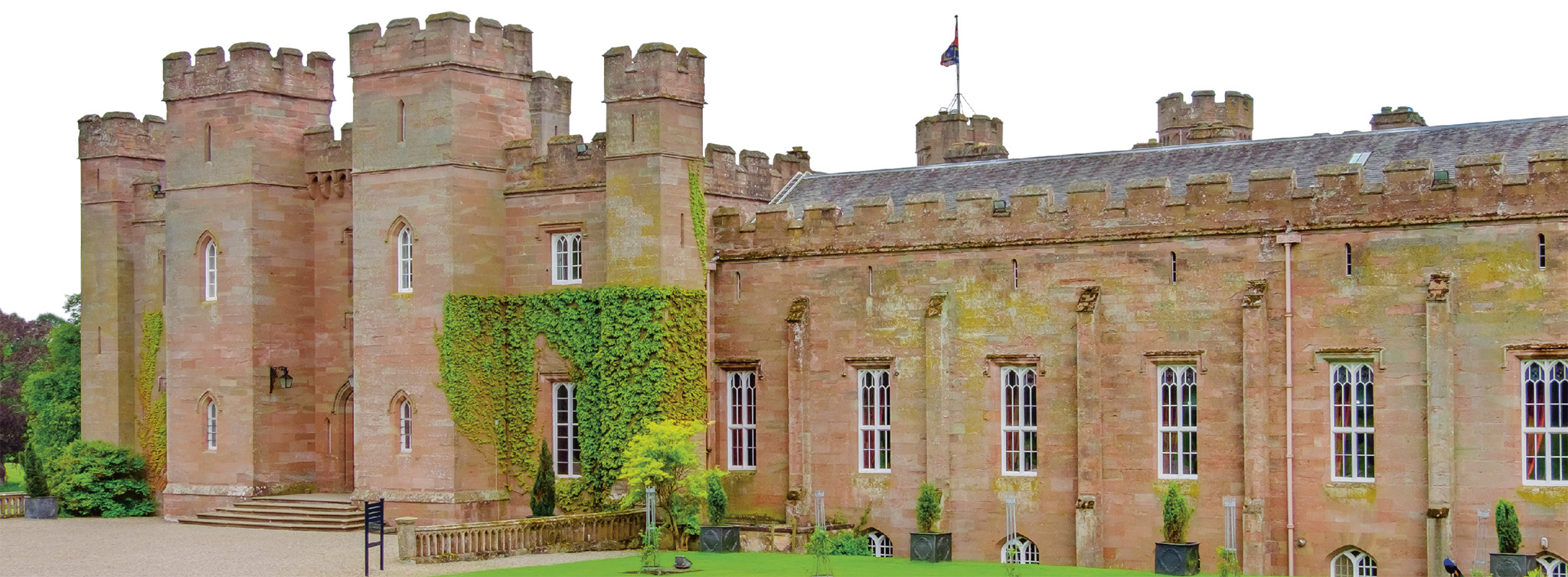
t Red sandstone exterior and castellated roof of Scone Palace
Pronounced “scoon”, this magnificent palace in the heart of Perthshire dates back to the 12th century. The site was once a Pictish gathering place, and since then has been a Christian church, an Augustinian priory and the seat and the crowning place of Scottish Kings. The last coronation in Scotland took place here in 1651, when King Charles II was crowned atop Moot Hill. Today the palace is one of the UK’s finest examples of the late Georgian Gothic style, having been rebuilt in the early 19th century for William Murray, first Earl of Mansfield. It is now a breathtaking treasury of fabulous objets d’art. Portraits of the Murray family gaze down from the walls of the Long Gallery, while beautifully inlaid furnishings, marble busts, ornate sculptures from mythology and elaborately crafted 18th- and 19th-century timepieces are displayed in every room.
Scone’s huge wooded gardens are home to red squirrels, roe deer and the rare Hawfinch, as well as peacocks who patrol the palace grounds. Stroll along the serene Laburnum Walkway, or climb to the top of Moot Hill, where famed Scottish kings, such as Macbeth and Robert The Bruce, were crowned.
Experience Central and Northeast Scotland
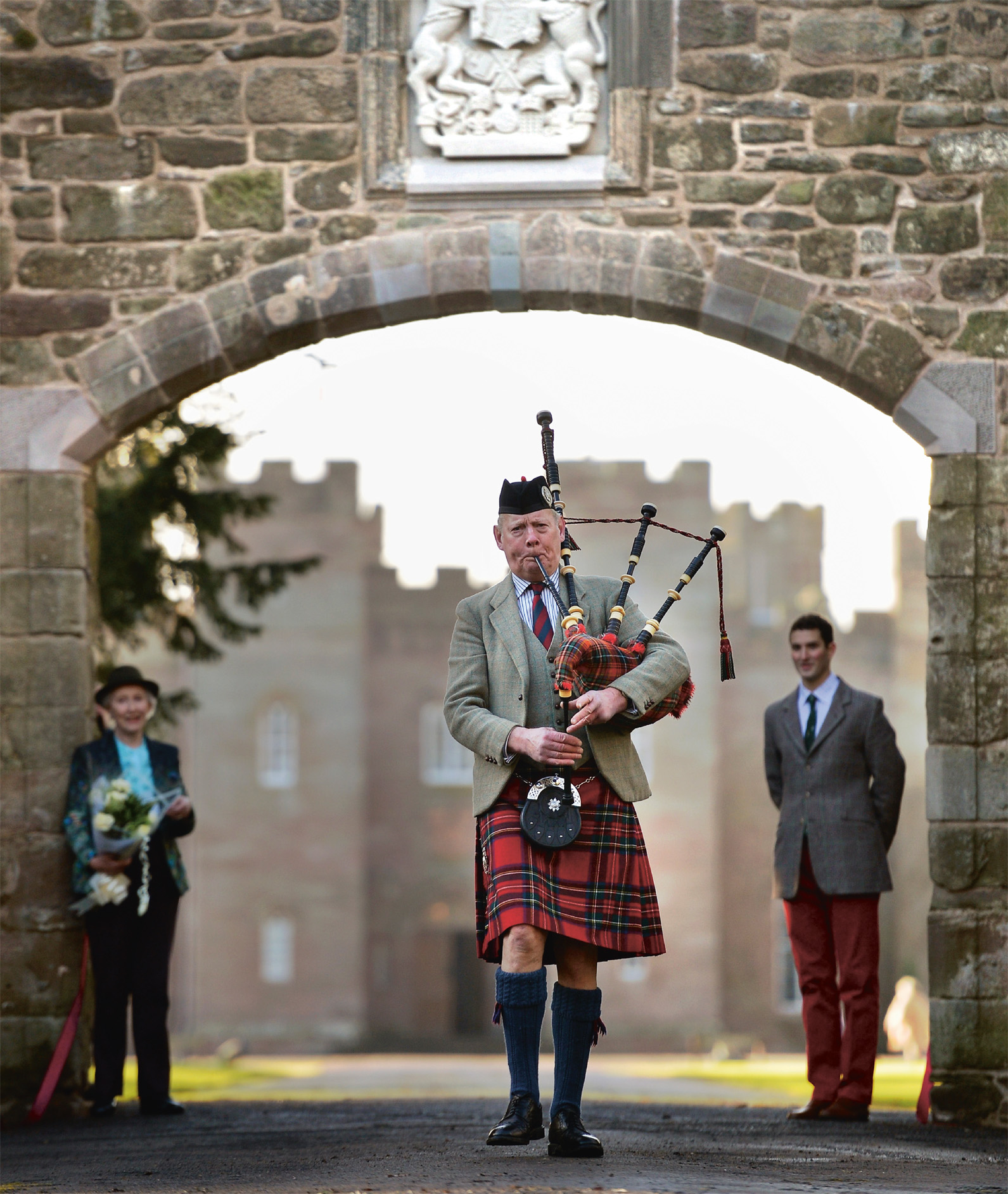
t A piping ceremony at the unveiling of Scone Palace’s restored 16th-century historic archway.
The Stone of Destiny
Scottish Kings were crowned on the rough-hewn Stone of Destiny from the dawn of the Scots kingdom until 1296, when Edward I took it to Westminster Abbey. In 1996 it was returned to Scotland, and it is now held at Edinburgh Castle. A replica sits atop Moot Hill, marking the site of the original.