The last chapter addressed various ways to test an online store for potential errors before it launches. Properly testing an online store with multiple users is considered a best practice and helps catch errors that might be missed by a single user. Once all testing has been completed and all errors corrected, the online store can be launched.
Once an online store is launched, many store owners think they can take it easy and wait for orders to come in because the hard work has been done. Some also have the Kevin Costner vision from the movie, Field of Dreams: If you build it, they will come. They envision their online stores being flooded with consumers who will purchase their products or services. However, this could not be further from the truth. If marketing has not taken place before the store launches, how will the target audience know the store exists? They will not. Marketing is the key to notifying the world that any type of store exists. Without a well-planned marketing strategy that is frequently reviewed, it is possible to go out of business sooner rather than later.
Marketing Strategy
Who will be in charge of the promotion campaigns?
What promotion techniques or methods will be used?
When will promotions begin?
Where will the promotions take place?
Why is promotion important?
How will the promotion take place?
As entrepreneurs and small business owners, it can be easy to create a marketing plan on the fly. It can generate some short-term sales and success, but it will not prepare a business for long-term sales growth and success. To be effective, a marketing strategy has to consider a business’s marketing budget along with the free and paid promotion resources that are available. How much should a business budget for marketing? A common rule of thumb is to spend 5 percent of a company’s total revenue on marketing, but if for a new online business, chances are that no revenue has been made. In this case, it would be better to focus on the free promotion/marketing resources until there is sufficient revenue to budget for paid resources that have a proven and positive return on investment.
Free and Inexpensive Marketing Resources
Until your online store becomes profitable, conserving money should be a top priority. With so many effective and inexpensive marketing resources available, why not start with them first? Let’s take a look at some.
Social Media
Social media has changed the way the world communicates and collaborates with each other. Spredfast.com reported that as of 2018, 37 percent of the world’s population, which is the equivalent of 2.8 billion people, use social media.1 With so many different social media platforms available to use for free with only an investment of time and effort, it only makes sense to take advantage of them. However, which ones should a business choose? According to a 2018 Pew Research Center survey, U.S. adults primarily use YouTube (73 percent) and Facebook (68 percent) online or on their cellphones, followed by Instagram (35 percent).2 What about the other social media platforms? The other social media platforms such as Twitter, Pinterest, Snapchat, and LinkedIn are used but with smaller numbers and different age demographics. Does this mean a business should only focus its marketing efforts on YouTube and Facebook and forget about the others? No it does not. It simply means that YouTube and Facebook should automatically be included in a business’s marketing efforts along with those platforms whose demographics match up with its target audience. Let’s take a look at some of these platforms and how they can be used.
YouTube
When most people hear the name YouTube , online videos immediately come to their minds. Brandwatch.com reports that YouTube is “the world’s second largest search engine and third most visited site after Google and Facebook.”3 It also reported that 400 hours of video are uploaded to YouTube every minute and over 1 billion hours of videos are watched a day. With these types of numbers, it is a no-brainer that a business should have a YouTube channel for their videos. Advances in technology have made it possible to create great videos inexpensively and edit them using mobile devices and mobile apps. During these videos, a business could provide demonstrations, commercials, or other engaging content about their products or services and reference their online store for viewers to visit. It is also a good idea to include a link to the online store in the Links section of a YouTube’s About Page.
Following closely behind YouTube, millennials and Generation X are the top Facebook users. As of December 2017, Facebook estimated that it averaged 1.4 billion users as daily active users.4 Not only do people enjoy sharing photos, videos, and other content, but they also ask for recommendations using the Facebook recommendation feature. One common free way that businesses can use Facebook to promote their products or services is via a business or fan page. By creating a business page, a business can add a shop now button on their page that can take visitors directly to their online store. The page will also allow a business to promote its products or services via images, videos, and more. Another Facebook feature that is good for promotion is Facebook Live. Facebook Live allows Facebook users to broadcast real-time video sessions from any Internet-connected mobile device and actively engage with their audience. These live broadcasts can be shot from anywhere and at any time and can last up to four hours. Once the broadcasts are over, they can be saved to a Facebook Page or Profile for others to view who might not have been able to view the live session. Facebook Live is an inexpensive way to not only increase a business’s followers but also promote new products or services or specials.
How much can be said using 140 characters? Quite a lot. Twitter can be used to send out tweets about the launch of a new business, new products or services, or any other helpful relationship-building information. For posts that are more than 140 characters long, URL shorteners such as bit.ly can be used to shorten a URL so that it can stay with the 140 characters limit as well as provide more analytic information concerning who engaged with the tweet. Similar to Facebook, Twitter also allows live videos to be created and shared to the Twitter stream and be searchable on Periscope. Periscope is Twitter’s live streaming website.
Instagram is another social media platform that can help market an online business. Once a business account is created, posts can be made with images or video created that can be shared with potential buyers. Instagram also provides insights to learn about followers or create promotions to grow a business. Within a user’s account profile, a URL can be added to help potential buyers locate their online store.
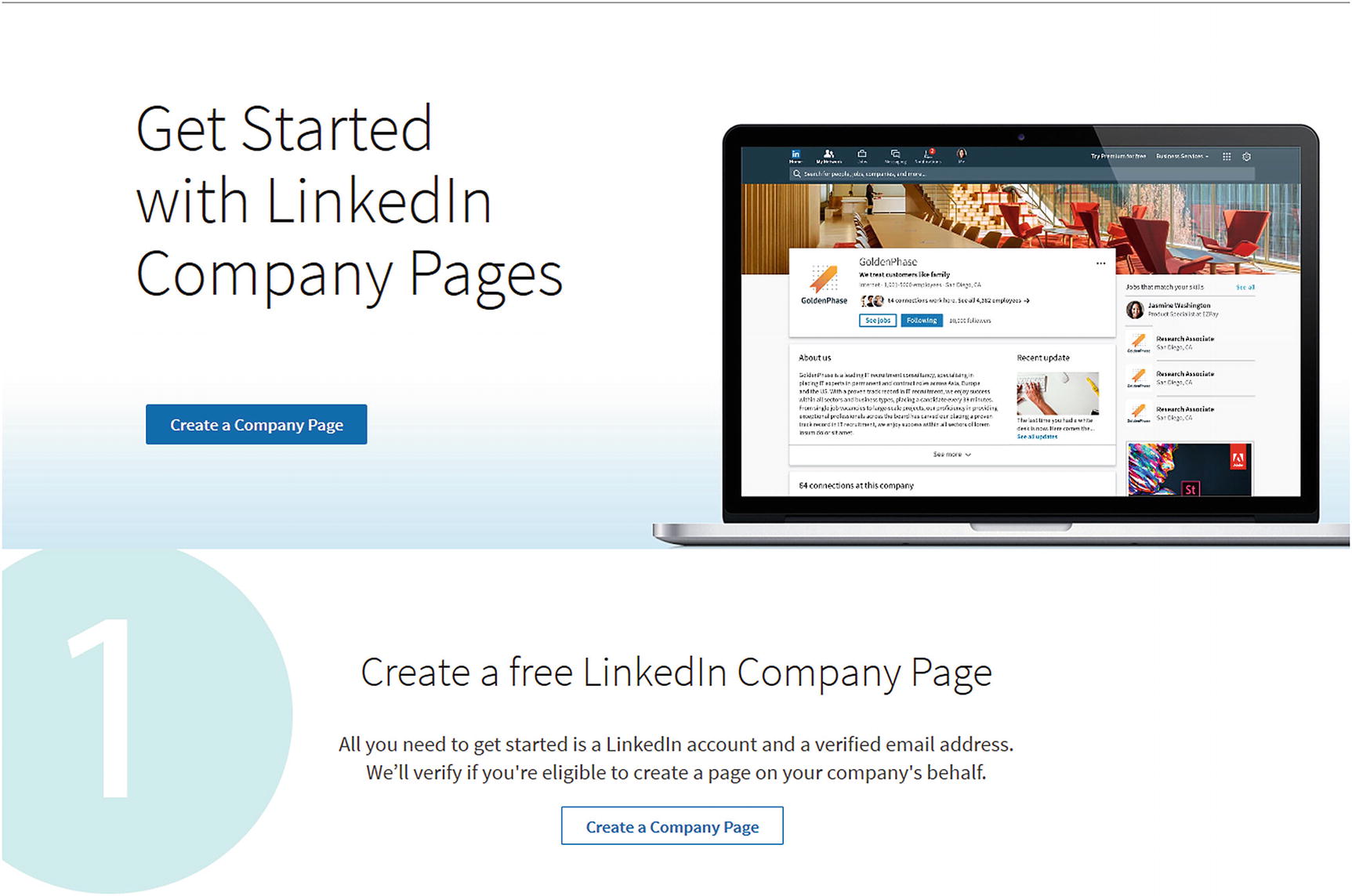
Creating a free LinkedIn Company Page
Snapchat
Depending on the target audience, Snapchat could be a good social media tool to use to promote an online store. A Snapchat story can consist of a photo or video that can be shared with the world. These stories last 24 hours before they are removed from a person’s Snapchat feed. Creating Snapchat stories with special discounts and coupons is a good way to attract visitors to the store.
E-newsletter
Constant Contact
Drip
Aweber
Get Response
Interviews
Technology has made it simple for anyone to start an online radio show or podcast. These resources are inexpensive ways for companies to not only introduce their brands to their target audience but also introduce their online stores with their products and services to the world. Software such as Audacity and other audio creation mobile apps can be used to create an audio file that can be uploaded to websites such as Soundcloud.com, libsyn.com, and others.
Paid Internet radio shows such as Blogtalkradio.com can also be used to start a radio show and increase a business’s brand and exposure. Not only is it a good idea to create a radio show but to also reach out to different online shows whose theme fits nicely with a company’s products or services and also have a nice size audience.
Press Releases
A press release is an inexpensive way to inform the public about something that has or will take place that is considered newsworthy. Some examples include the opening of a new business, community event, and others. Since it is not a paid advertisement, it tends to have more credibility than traditional ads and appears as a typical news story. Not only can a properly written press release be published in a newspaper but also help generate the interest for a news story. A press release can either appear in print media sources such as newspapers or online sources such as blogs, search engines, and online news sites. Printed press releases can be harder to get the attention of a reporter particularly if it is not written in an interesting or engaging manner. A typical press release answers the 5 W’s (who, what, where, why, and when) questions. Press release templates can be located within Microsoft Word as well as searching for them on Google. Freelance press release writers can also be found on freelance websites such as fiverr.com and elance.com.
Free-press-release.com
Pr.com
Newswiretoday.com
I-newswire.com
Express-press-release.com
Clickpress.com
24-7pressrelease.com
Custom Images
Most people have short attention spans and prefer visual content such as videos and images as opposed to reading text. Creating custom infographics using photography editing mobile apps such as Camly. ImageQuote, and PicLab, and free software such as Canva.com can help create professional-looking infographics and sales graphics for the online store that can include the online store’s URL. Once created, these images can be shared on other social media platforms.
Company Phone Message
With all the talk about social media and videos, it is easy to forget about something as simple as a company’s phone greeting . The phone greeting is a great opportunity to tell callers about the newly launched online store as well as its URL.
Coupons and Discounts
Who does not like to save money? Everyone loves to save money, including potential customers. If coupon codes were not created during the initial setup of the online store, begin to create some coupon codes. These coupon codes can be shared on social media platforms such as Facebook, Twitter, Snapchat, and Instagram to name a few. Coupons provide an incentive for consumers to purchase a product or service while saving money.
Blogging
Who does not have a blog these days? Advances in blogging platforms have made it easy and fast for anyone to create a blog. The benefit of blogs is that people can blog about their interests and easily share those thoughts with the world who can also share those thoughts with their online network. Since blogs are updated more frequently than regular websites, they help increase search engine rankings.
Launching an online store provides enough new and fresh blog content to not only peek curiosity but also attract followers and visitors. Since your online store is already built on WordPress, blogging should not be a problem. Oftentimes, people worry that they will not have time to blog. Not a problem! WordPress allows blog posts to be scheduled, which is convenient and can fit within the busiest of schedules.
Pinterest is another social network that can be used to develop a company’s brand and following. It is estimated to have over 200 million active monthly users who are mostly female. According to Pew Research, roughly 31 percent of Internet users use Pinterest.6 These users share images and videos by “pinning” them to their virtual boards or others’ boards similar to bulletin boards of the past. People tend to search Pinterest similar to Google for items of interest and to discover new brands. With 35 percent of Pinterest users having an annual income of over $75,000, they can afford to make purchases.7 Another good thing about Pinterest is that its pins are considered evergreen and are repined over 11 times, which can increase a brand’s exposure. Not only can sharing product images or videos help increase your online store’s brand, but also sharing and saving others’ pins can help your online store gain needed attention.
Paid Social Media Ads
Depending on which social media platforms a business uses, they all offer some type of paid ads. These ads can be customized to fit a business’s demographic needs as well as its budget. For example, Facebook allows paid ads to be created and purchased based on a budget amount as well as demographic information. Once the ad information has been entered, Facebook will provide information on how many people the ad will reach. It also allows tracking of the ad campaign for the ad duration. Other social media sites such as Twitter, Instagram, LinkedIn, and more offer this option as well. Which one you choose depends on your target audience as well as your budget.
Summary
Marketing an online store is a continuous job that must be reviewed frequently. To truly be effective and receive good, positive results, consistent marketing strategies must be used. It is also a good idea to review the marketing budget to see how much is available for marketing purposes. If a budget does not exist, it is good to start out with free marketing resources. When using a good mix of marketing strategies, a good return on investment can be achieved.