In the previous chapter, you gained a better understanding of e-commerce and its impact on local and global economies as well as local businesses. E-commerce retailers such as Amazon.com, eBay, and Walmart.com have dominated the virtual marketspace and changed how consumers shop and how enterprises conduct business. You also learned more about its history than you probably wanted to know, but it helped you understand the foundation upon which the e-commerce that we know today is based. After reviewing its history and its current state, there is no denying that advances in technology have brought us to a place many never thought was possible. By now, you probably have already determined that you need to add e-commerce to your business, but you still might be unclear as to how to do that. Where should you begin?
Why Create an E-commerce Strategy?
The appeal of e-commerce’s low startup costs, ease of entry, and potential profits can make anyone want to immediately launch a web page with some PayPal “Buy” buttons on it and begin selling products and services online. Although this approach might yield some short-term sales, it might not be as successful in the long term. Why? It wasn’t based on a solid foundation that was well thought out and will eventually fail. Does the saying, “If you fail to plan, you plan to fail” ring a bell?
When deciding to implement an e-commerce strategy, planning is crucial (Figure 2-1). It allows you to take an eagle-eye view of your company and its products and services to determine the best way to present and sell them to your target audience. It also helps determine whether your products or services would be a good fit to sell online. Even though technology gives us the ability to create online stores to sell anything to anyone doesn’t necessarily mean that we should. Some things don’t sell well online. As a result, money and time are wasted trying to entice people to buy things that don’t interest them when it could have been better used elsewhere.
So, what makes a good plan? Before the days of global positioning systems (GPS) in cars and on mobile devices, we used good old-fashioned maps or an atlas to help guide us to our destinations. We’d unfold it, spread it out, and chart our course by identifying our starting as well as ending location. As we drove along, we would review the map to verify that we were traveling in the right direction before we veered too far off course. If we found ourselves lost, we would either pull over and look at the map again or ask for directions (depending on your sex). Once we were back on track, we felt confident and assured that we would reach our destination.
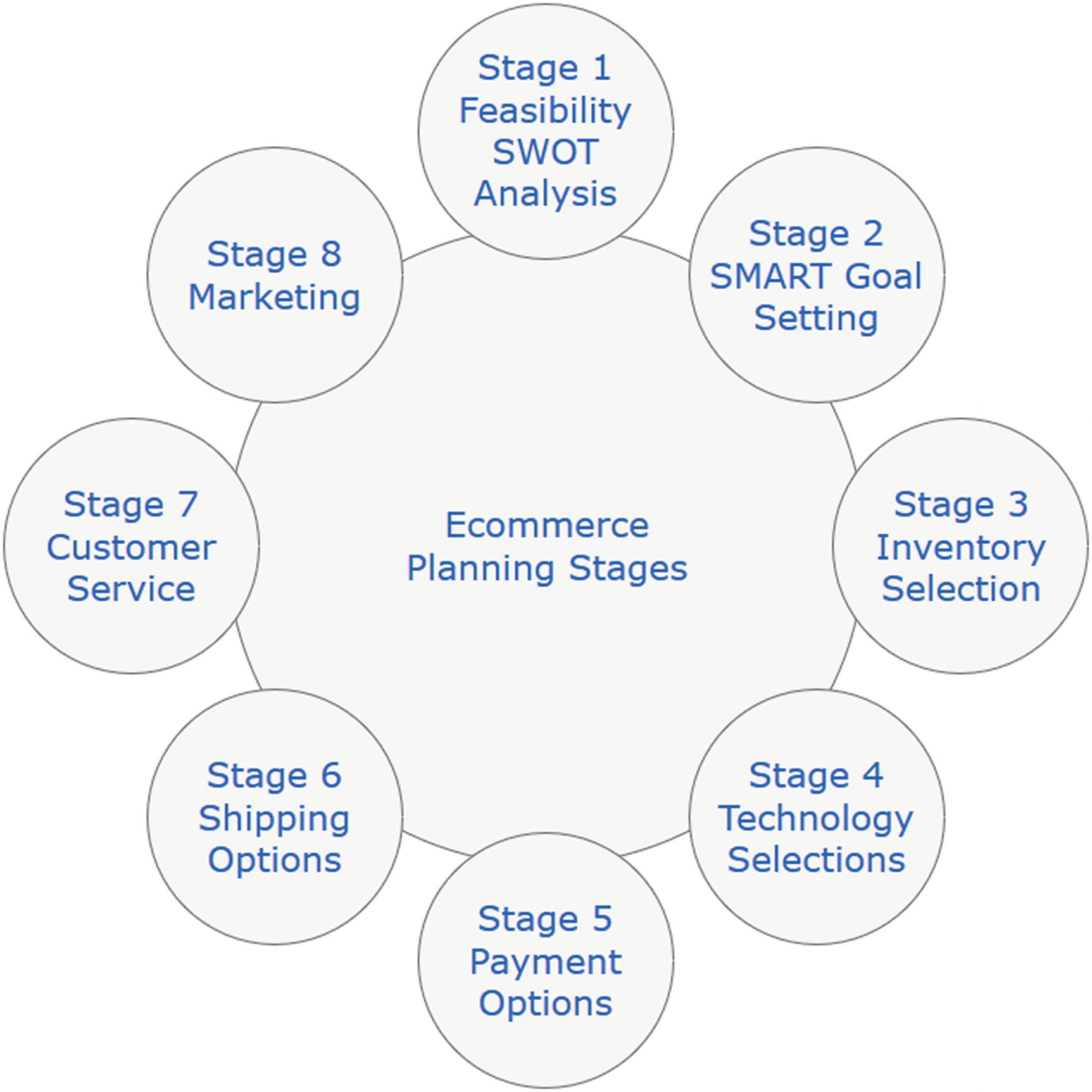
E-commerce Planning Stages
Planning your e-commerce strategy also helps your business adapt to changing market conditions so that you can stay competitive. Within the e-commerce marketspace, competition is fierce and continuously evolving. Many brick and mortar businesses are steadily transitioning themselves into click and brick stores. Click and brick stores have physical store locations but also offer customers the ability to shop online and have items either shipped to their homes or picked up at a store location. Trends change so rapidly that you must stay well-informed of what is going on in the market to compete for and hold on to your market share. Otherwise, you and your business could get left behind without a chance to recover. Before you know it, you could be forced out of business and left wondering what happened.
Creating Your E-commerce Strategy
Before you begin creating your e-commerce strategy, you need first to ask yourself one vital question: Why do you want to sell items online? In other words, what’s your purpose for creating an online store? You might be wondering why you should ask yourself this question, but depending on your answer, it could save you some time and money and help predetermine your business’s e-commerce success or failure.
E-commerce is not for the faint of heart. To be successful, it will involve a lot of research along with hard work. We look at success stories such as Amazon.com and think that we can do it too. There is nothing wrong with having that positive vision, but we must realize that everyone wants to become the next Amazon. Just like Amazon didn’t become a success overnight, neither will you. Competition in the e-commerce marketspace is fierce. Success comes at a cost. You will pay your dues through trial and error, sweat, and tears until you perfect your strategy. Even though today’s e-commerce solutions such as Shopify and PayPal make it easier than ever to set up online stores, that’s only one piece of the puzzle. It will still take time to see success.
Many businesses want to sell products or services online but haven’t thoroughly planned their strategy. This is like building a house without a blueprint. Who does that? Even though you might make a home, you don’t know if it was built correctly or how long it will remain standing. The same principle applies to creating an online store. By understanding your purpose for starting an online store, it will keep you focused on your end goal and not just profits. Not to say that gains are not essential, but to keep them consistently flowing, you must be diligent.
SWOT Analysis
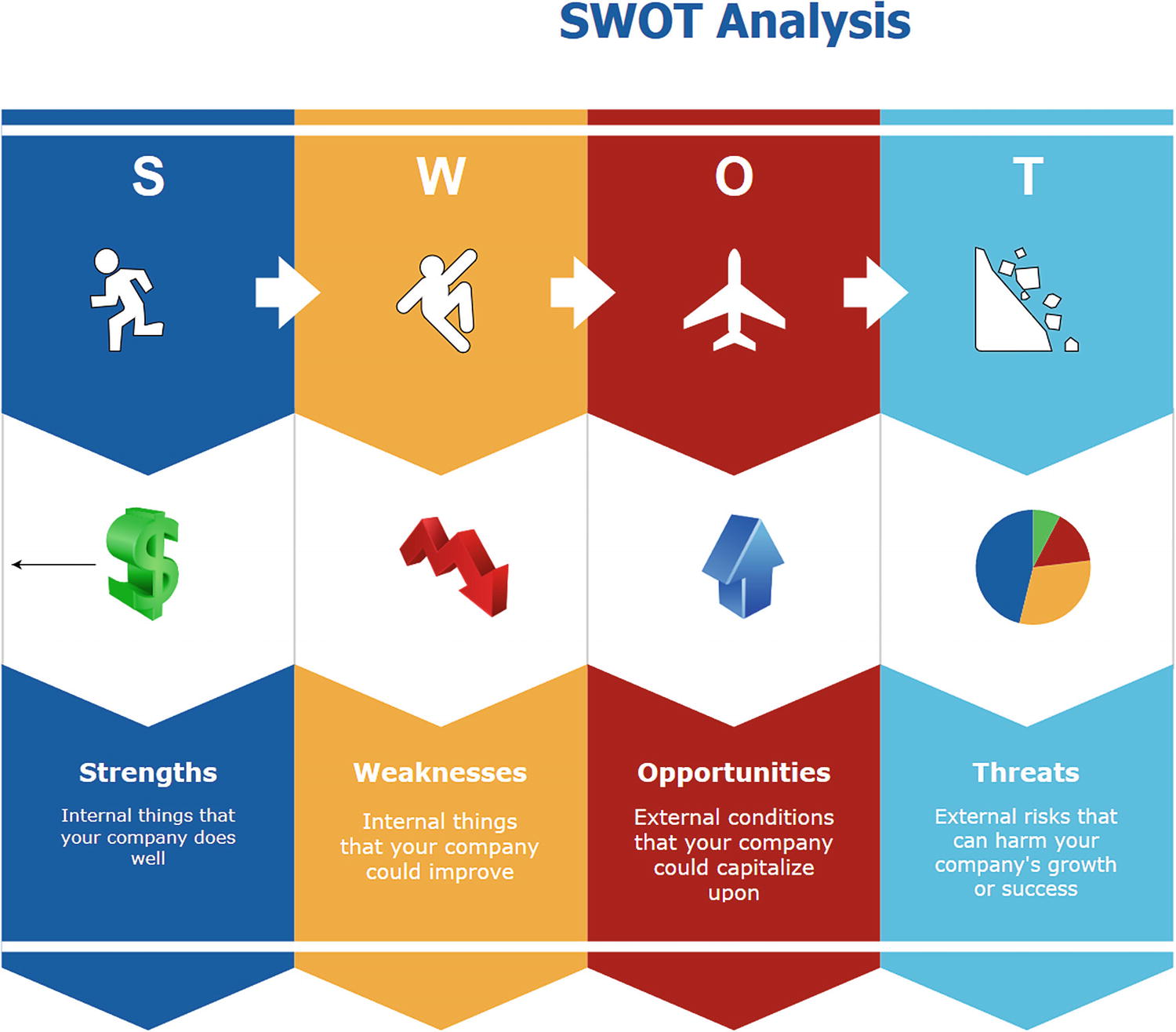
SWOT Analysis can help plan your e-commerce strategy
Goal Setting
Specific
Measurable
Attainable
Relevant
Timely
These criteria will help you evaluate whether your goals are realistic or whether they need to be revised. Once you have created your goals, you must review them periodically to make sure that you are still on track.
Budget
Wouldn’t it be great if you didn’t have to worry about money? Absolutely! Unfortunately, being an entrepreneur or small business owners means that you must watch every dollar and use it wisely. One way to do this is by creating a budget.
Web Hosting
Domain Name
SSL Certificate
E-commerce Theme
E-commerce Plugins
Marketing tools and materials
Search engine optimization
Merchant account and fees
Credit card fees
Employee costs
Warehouse space (if applicable)
Analytics software to track visitors and their movements on your store
Of course, there will be more, but these are just a few to get you started. By being aware of them ahead of time, they won’t come as such a surprise when they occur. You will already be mentally and financially prepared. Throughout the book, we will discuss many of these budget items in detail.
Inventory
Physical products
Services
Digital media
Offering physical products allow consumers to see images of the item before making a purchase. They also require shipping. From a business standpoint, you must determine which shipping methods will be used, along with the cost. You also must decide where you will store the products until they are purchased. If you operate a brick and mortar or click and mortar store, you already have inventory storage available. However, if you are a pure-play retailer, you will have to find a room, which could involve additional costs. With services, you don’t have to worry about storing or shipping anything. Services are intangible, so the only thing that needs to be provided is the service.
Since mobile technology has made the shift to digital media products and services more accessible to retrieve and receive, you should determine whether your product offerings will consist of digital products, physical products, or a combination of the two. Based on your knowledge of your customer base, you should be able to decide.
Timeline/Project Schedule
In the IT field, whenever you ask someone, “What’s the deadline for this project?,” the answer was always “yesterday.” When it comes to launching your online store, you might feel the same way. However, if you want to make sure it is done the first time correctly, you will need a project plan or schedule. Otherwise, you can end up spending more time and money than you originally anticipated.
Microsoft Excel
Libre Office Calc
Google Sheets of GSuite
Zoho.com
Trello
Basecamp
Asana
Other online project management software can be found by Googling. Likewise, mobile apps can be found in Apple’s App Store or Google’s Play Store. It doesn’t matter what application you use if you are comfortable with using it.
Once you have all your project tasks recorded, you will be able to determine a projected completion date for your online store. This date is not set in stone but gives you an idea of your potential time frame. Your project plan now becomes your road map and will guide you to the finish line. This plan must be reviewed and updated periodically to reflect your project’s progress accurately. Otherwise, it is an ineffective tool.
Things to Consider
During the planning phase, it is not uncommon for some requirements to get overlooked. These oversights can make a big difference and could negatively affect your bottom line. If you are not careful, they could even cost you extra money, which could affect your budget. Here are some items for you to consider as you think about your online store.
Online Store Planning Checklist
Have you purchased a domain name?
How much have you budgeted for web hosting?
What payment gateway will you use?
Will you need to acquire an e-commerce theme for your store?
Is your e-commerce theme responsive or mobile ready?
Will you need an online merchant account?
Target Audience
Who is your target audience ?
How will you attract your target audience?
Product/Service Selection
Will you offer digital or physical products or both?
How many products or services will you start with?
How often will you update product or service offerings?
Customer Service
How will you handle customer service issues?
What will be your refund policy?
What will be your privacy policy?
Marketing
How will you market your online store?
What techniques will you use for customer retention?
These are not all the questions you will ask, but at least these will get you started. In the next chapter, we will take a look at WordPress and how it can help you start to build your e-commerce strategy and solution.
Summary
SWOT Analysis
Goal Setting
Inventory Selection
Timeline/Project Schedule
By considering these components before launching an online store, you minimize the chances of wasting time and money.